
Agentic AI marks a clear shift in how artificial intelligence is designed, deployed, and measured. Instead of responding to isolated prompts or producing single outputs, agentic systems operate with intent. They pursue goals, decide on actions, use tools, evaluate outcomes, and adjust behavior over time. This change matters because most business problems are not single-step questions. They are sequences of decisions, trade-offs, and follow-through.
For leaders, product teams, and operators, the real question is no longer whether AI can generate text or predictions. The question is whether AI can take responsibility for outcomes within defined boundaries. That is where agentic AI enters the picture.
What Is Agentic AI?
Agentic AI refers to artificial intelligence systems designed to act as autonomous agents. An agent receives a goal, understands context, plans a series of actions, executes those actions using available tools or systems, and evaluates progress until the goal is met or constraints are reached.
This differs from traditional AI systems in several important ways:
- The system is goal-driven, not prompt-driven
- Decisions are made across multiple steps, not a single response
- Actions may involve external tools, APIs, or workflows
- Behavior adapts based on feedback from outcomes, not static rules
A simple way to think about it: traditional AI answers questions, while agentic AI completes tasks.
Agentic AI vs Traditional AI Systems
| Aspect | Traditional AI | Agentic AI |
|---|---|---|
| Interaction model | Prompt and response | Goal and execution |
| Task scope | Single step | Multi-step |
| Autonomy level | Low | Controlled autonomy |
| Tool usage | Limited or manual | Integrated and continuous |
| Adaptation | Minimal | Feedback-driven |
This distinction explains why agentic AI is often described as moving AI from assistance to ownership.
Why Agentic AI Is Emerging Now
Agentic AI is not a sudden breakthrough. It is the result of several capabilities maturing at the same time.
First, reasoning-focused language models have improved in planning and decomposition. They can break a broad objective into smaller, ordered tasks. Second, modern AI systems can call tools, access databases, trigger workflows, and interact with software environments. Third, organizations are under pressure to reduce manual coordination across teams, systems, and processes.
Research and industry analysis from firms such as Gartner and McKinsey & Company point to a shift from AI as insight generation to AI as execution support. Agentic AI sits at the center of this transition.
How Agentic AI Works: A Practical View
| Stage | What Happens | Practical Example |
|---|---|---|
| Goal Interpretation | The agent receives a clear, high-level objective and understands what success looks like. | Increase lead-to-demo conversion, resolve a customer complaint, prepare a weekly performance report. |
| Context Gathering | Relevant information is collected from documents, systems, past interactions, and live inputs. | Pulls CRM data, previous emails, customer history, and current pipeline status. |
| Planning | The agent determines the required steps, their sequence, and the tools or actions needed. | Identifies follow-ups, analysis tasks, and communication steps needed to reach the goal. |
| Execution | Planned actions are carried out using available tools and systems. | Sends emails, updates records, runs analyses, schedules meetings, or triggers workflows. |
| Evaluation and Adjustment | Outcomes are reviewed against the goal, and the plan is refined if results fall short. | Checks conversion improvement and adjusts messaging or next actions accordingly. |
Real-World Use Cases of Agentic AI
1. Enterprise Operations
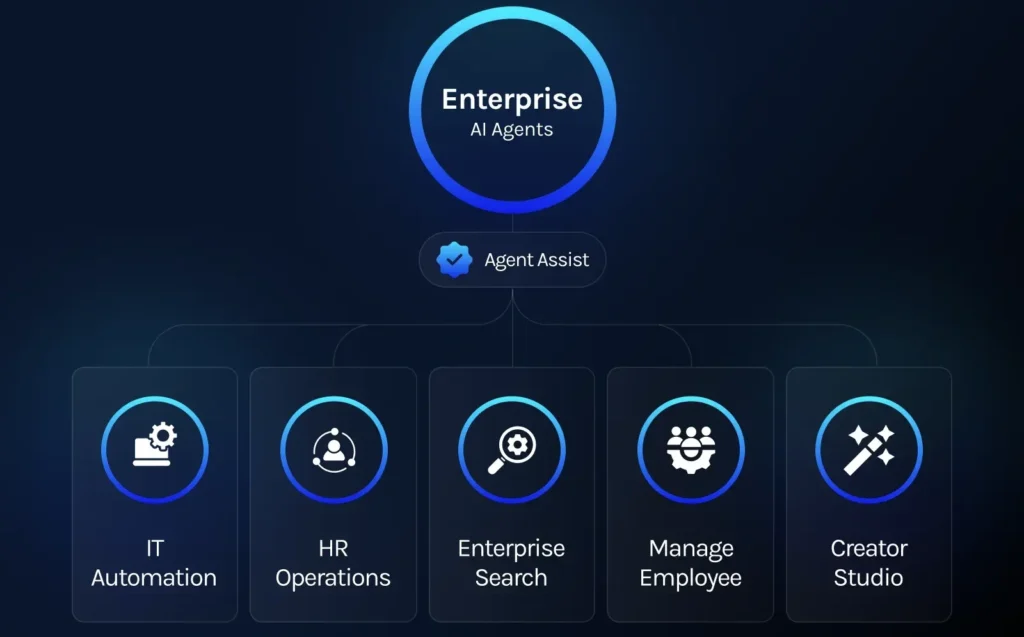
Agentic systems can monitor workflows, identify bottlenecks, assign tasks, and follow up until issues are resolved. Instead of dashboards that require constant review, the agent takes initiative within predefined limits.
2. Sales and Revenue Enablement
Agentic AI can analyze pipeline data, identify stalled deals, suggest next actions, schedule follow-ups, and coach representatives based on observed conversation gaps. The focus shifts from reporting to improving execution quality.
3. Customer Support
Rather than routing tickets endlessly, an agent can diagnose the issue, retrieve relevant information, apply fixes, and escalate only when human judgment is required.
4. Training and Capability Development
Agentic systems can run simulations, evaluate performance, recommend practice scenarios, and track improvement over time. This is especially valuable in regulated or high-stakes environments where consistency matters.
Benefits That Matter to Decision-Makers
Agentic AI creates value when it addresses real operational pain points. The most common benefits include:
| Outcome | What It Means in Practice |
|---|---|
| Reduced dependency on manual coordination | Fewer follow-ups, handoffs, and status checks across teams |
| Faster completion of multi-step tasks | Work progresses automatically without waiting on sequential approvals |
| More consistent execution across teams | Standard processes are followed the same way, every time |
| Better use of human time for judgment-heavy work | Teams focus on decisions and strategy, not admin or tracking |
The impact is most visible in roles where work involves repeated decisions, structured processes, and clear success criteria.
Risks and Guardrails You Cannot Ignore
Autonomy without control creates risk. Agentic AI systems must be designed with clear boundaries.
Key considerations include:
- Defined authority levels: What actions can the agent take independently
- Human checkpoints: When escalation is required
- Auditability: Clear logs of decisions and actions
- Domain constraints: Rules that reflect legal, ethical, or compliance needs
Organizations that treat agentic AI as an experimental toy often face trust issues. Those that treat it as part of operational design tend to see sustained results.
How to Evaluate Agentic AI for Your Organization
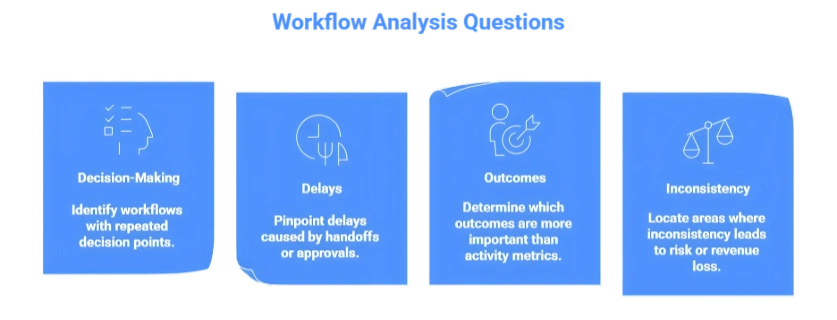
Before adopting agentic AI, ask practical questions:
- Which workflows require repeated decision-making?
- Where do delays occur due to handoffs or approvals?
- What outcomes matter more than activity metrics?
- Where does inconsistency create risk or lost revenue?
Start with narrow, well-defined use cases. Expand autonomy only after observing stable performance.
The Road Ahead: From Tools to Teammates
Agentic AI represents a shift in how organizations think about intelligence at work. The value does not come from novelty. It comes from reliability, clarity of goals, and thoughtful constraints.
As agentic systems mature, success will be measured less by model size and more by how well these agents operate inside real workflows. Teams that understand this shift early will be better positioned to turn AI investment into tangible outcomes.
Agentic AI is not the end of human decision-making. It is a new layer of execution that works best when humans define direction and agents handle follow-through.