Overview
Pharma sales is a high-stakes field requiring technical expertise and emotional intelligence. With stricter regulations, limited HCP access, and rapid product changes, preparing reps for high-pressure performance is critical. The debate between virtual sales roleplay and real-life practice is heating up, especially with AI-driven simulation tools. This article compares their impact on learning retention, engagement, and overall training success.
What You’ll Learn:
- Key differences between virtual roleplay and real-life practice in pharma sales.
- Pros and cons of each method for training effectiveness.
- How AI sales roleplay tools enhance learning.
- When to use each approach—or both.
- Strategies for choosing the best training for your team.
1. Rise of Virtual Roleplay for Pharmaceutical Sales Training
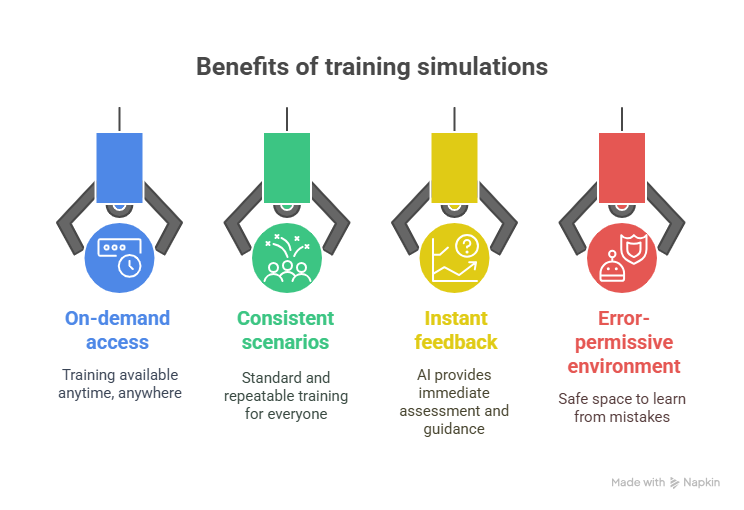
Traditionally, reps learned through classroom sessions or shadowing field reps. AI-powered virtual roleplay introduces a new era of training with:
- On-demand access: Reps train anytime, anywhere.
- Consistent scenarios: Standardized, repeatable training for all.
- Instant feedback: AI assesses tone, vocabulary, and compliance.
- Error-permissive environment: Learn from mistakes without consequences.
- Analytics-driven coaching: Data customizes future sessions.
Common Use Cases: New product training, handling HCP objections, practicing compliance-friendly messaging, and accelerating onboarding.
2. Real-World Application: The Traditional Gold Standard
Despite technological advances, real-life HCP interactions offer unique value:
- Immediate HCP feedback: Real-time adaptation to responses.
- Emotional learning: High-stakes settings enhance engagement.
- Individualized coaching: Contextual feedback from managers.
- Improvisational skills: Builds real-world confidence.
Limitations: Limited shadowing opportunities, risk of non-compliance during learning, inconsistent coaching quality, and high time/cost demands.
3. Leveraging the Potential of AI-Driven Pharmaceutical Sales Simulation
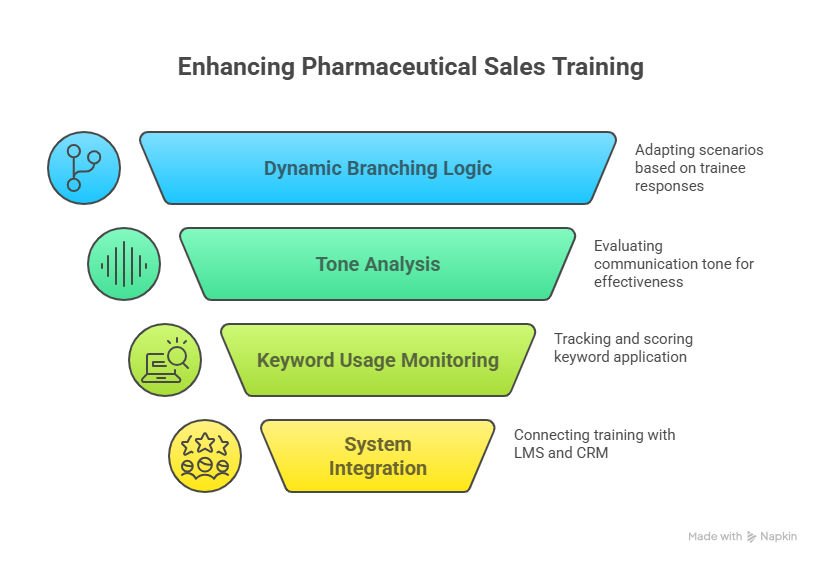
Advanced AI simulations mimic real HCP interactions, bridging classroom learning and field practice. Key features include:
- Realistic dialogue with dynamic branching logic.
- Tone analysis and keyword usage monitoring.
- Integration with LMS and CRM systems.
- Role-specific modules for different sales cycle stages.
Why AI Sales Roleplay Is a Game-Changer: Scalable training, personalized feedback, and traceable progress for managers.
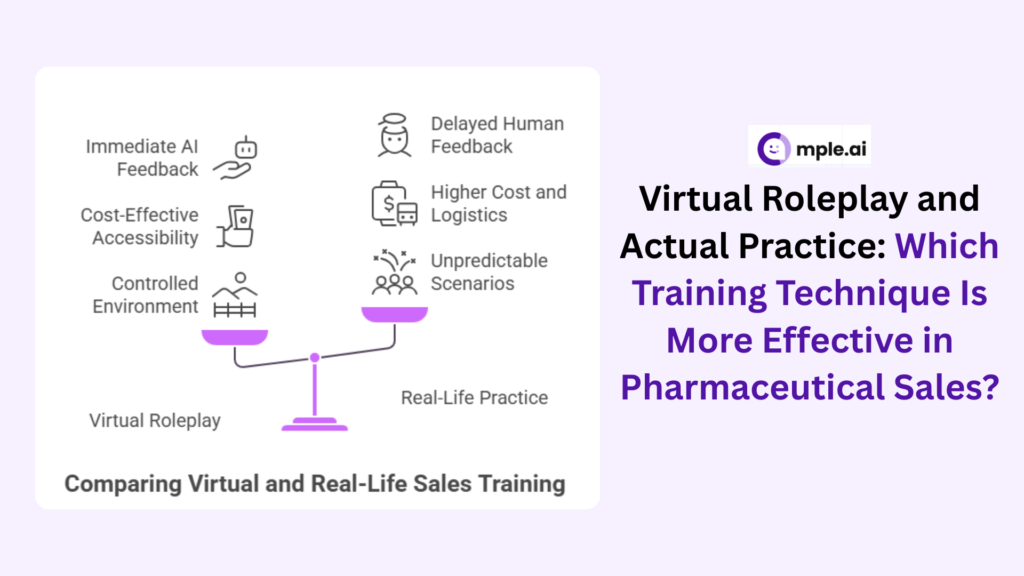
4. Comparing Sales Training Methods: Which Is the Most Effective?
| Criteria | Virtual Roleplay | Real-World Practice |
|---|---|---|
| Accessibility | High (anytime, anywhere) | Restricted to field visits |
| Speed of Feedback | Instant via AI | Delayed via manual reviews |
| Emotional Pressure | Low to medium | High (real consequences) |
| Risk of Non-Compliance | None | Possible during learning |
| Cost | Low (once implemented) | High (travel, supervision) |
| Consistency of Experience | High | Variable (HCP/territory) |
5. Hybrid Approach: The Best of Both Worlds
The most effective 2025 pharma training programs combine virtual and real-world methods:
- Use virtual roleplay for onboarding, product launches, and messaging.
- Shift to real-world practice once reps gain confidence.
- Reinforce field experience with virtual coaching platforms.
- Conduct monthly AI assessments to track and adjust progress.
This hybrid model ensures thorough, safe training with real-world exposure.
Main Points
- Virtual roleplay excels in scalable, data-driven training.
- Real-world practice builds soft skills and adaptability.
- AI simulations bridge theory and practice.
- Hybrid models combine simulation control with real-world unpredictability.
- Top training is personalized, data-driven, and dynamic.
How MPLE AI Elevates Hybrid Pharma Sales Training
Mple AI supports hybrid training with AI-driven roleplay, speech analysis, objection handling feedback, and compliance assessments. Benefits include:
- Customized simulations for products or therapeutic areas.
- Performance trend monitoring via analytics dashboards.
- Seamless CRM and LMS integration.
- Faster onboarding cycles.
- Continuous AI-powered practice post-fieldwork.
Mple AI transforms reps into confident, compliant, high-performing professionals.
Conclusion
In the fast-evolving pharma sales landscape, training must adapt. Virtual roleplay and real-world practice aren’t mutually exclusive—used strategically, they create a confident, compliant sales force ready for challenging markets.
Ready to rethink your pharma sales training? Book a demo with Mple AI today!
FAQs
1. What is virtual roleplay for pharma sales?
It’s an AI-powered simulated environment where reps practice HCP conversations in realistic, repeatable settings.
2. Is virtual roleplay superior to real-life training?
Both have strengths: virtual roleplay offers scalability and safety, while real-world practice builds emotional resilience. A hybrid approach is ideal.
3. How does AI enhance pharma sales training?
AI analyzes speech, identifies messaging gaps, provides instant feedback, and tracks progress for faster, better learning.
4. Can virtual sales coaching substitute for human managers?
AI augments managers by handling scalable basics, freeing them for advanced, strategic coaching.
5. Which is the most effective sales training method in pharma today?
A hybrid model combining AI-driven virtual roleplay, live coaching, and field experience is the most impactful.