Sales training has evolved from classroom instruction to AI-driven solutions. In 2023, the market valued over $2.7 billion, highlighting the demand for innovative training to improve sales performance. AI-powered training offers personalized learning, real-time feedback, and accurate ROI measurement to address today’s complex sales landscape.
What You’ll Learn
- The limitations of traditional training and why AI is trending.
- Key AI technologies in sales training, like NLP, ML, and predictive analytics.
- Benefits of AI-based traininglike scalability, consistency, and precise measurement.
- Practical Implementation of strategies for AI in sales training.
Traditional Sales Training: The Foundation
Classroom-Based Training
Traditionally, sales training was centered on in-person, classroom-based instruction. Sales representatives attended workshops to learn company products, sales methodologies, and core communication skills. This format allowed for real-time interaction between trainers and trainees, fostering a collaborative learning environment.
Hands-On Learning Methods
Role-playing exercises have been a cornerstone of traditional sales training, simulating real-life scenarios where sales reps can practice handling objections, delivering product pitches, and navigating customer interactions. Field training allowed new hires to shadow experienced reps, observing best practices and gaining hands-on experience.
Documentation and Materials
In the past, training was heavily reliant on static materials such as training manuals, product documentation, and sales playbooks. These resources served as references for reps, but were often difficult to keep updated, limiting their effectiveness in fast-paced sales environments.
Challenges in Traditional Training
Scalability Issues
Scaling traditional training programs presents numerous challenges, especially for large organizations with geographically dispersed teams. Conducting in-person sessions for every team across different regions requires significant resources, including time, trainers, and travel expenses.
Consistency Concerns
Maintaining consistent training quality is challenging when delivered by multiple trainers with different styles and experiences. This variation can lead to message dilution, inconsistency in skill development, and discrepancies in learning outcomes across teams.
Measurement Difficulties
Tracking the effectiveness of traditional sales training is challenging due to limited data. Without real-time tracking and analytics, it’s difficult to measure knowledge retention, engagement, and performance outcomes, making ROI calculation almost impossible.
The AI Revolution in Sales Training
AI-Powered Training Platforms
AI-powered platforms offer significant improvements in flexibility and accessibility. Virtual learning environments allow sales reps to access training modules anytime, anywhere, accommodating diverse schedules and enhancing engagement. Adaptive learning systems adjust content in real-time based on individual progress, ensuring that reps gain the necessary skills before advancing.
Smart Technology Integration
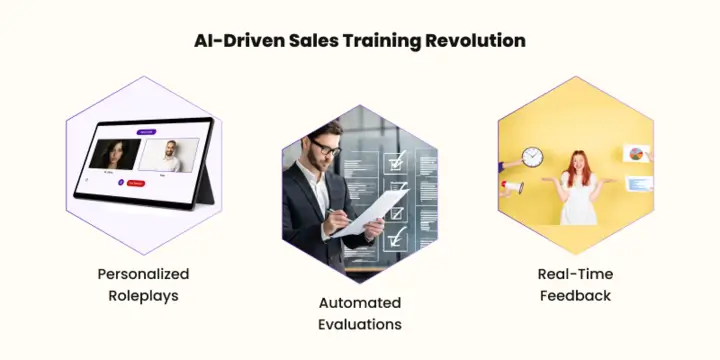
AI technologies like Natural Language Processing (NLP), machine learning, and speech recognition enhance training programs. These technologies analyze conversations and provide objective feedback on verbal cues, tone, and confidence, enabling sales reps to refine their pitches and build communication skills.
Data-Driven Approach
AI-based training provides deep insights into reps’ behaviors and performance. Analytics track key metrics such as completion rates, time spent on modules, and interaction patterns. Behavioral insights and predictive modeling allow for proactive adjustments, ensuring that training stays aligned with team needs and business goals.
Key Features of Modern AI Sales Training
Virtual Role-Play Simulations
Virtual role-plays simulate real-world sales scenarios where reps can practice in a risk-free environment. AI analyzes responses in real-time, offering feedback on voice modulation, empathy, and clarity. This dynamic approach to role-playing helps reps refine their skills and build confidence before engaging with actual customers.
Personalized Learning Paths
AI identifies skill gaps and creates customized learning paths for each rep, focusing on areas for improvement while allowing learners to progress at their own pace. This level of personalization improves engagement, skill retention, and overall effectiveness, as reps receive training tailored to their needs.
Analytics and Reporting
Advanced analytics provide detailed dashboards that visualize performance metrics, enabling sales leaders to track each rep’s strengths and areas for improvement. Success metrics like engagement rates, completion times, and skill application scores offer clear insights into training effectiveness.
Benefits of AI-Powered Sales Training
Efficiency Improvements
AI saves time and resources by making training available on-demand, allowing reps to learn on their own schedule. Automation reduces the need for manual oversight, enabling trainers to focus on strategic tasks rather than administrative duties.
Enhanced Learning Experience
AI enhances engagement through interactive, immersive experiences. Personalization, real-time feedback, and adaptive learning keep learners engaged and improve knowledge retention, making training more effective and enjoyable.
Measurable Results
With AI, companies gain access to detailed training metrics, allowing them to track engagement, performance, and retention rates. This data-driven approach provides clear, quantifiable ROI, enabling companies to make informed decisions on training investments.
Implementation Strategies
Assessment Phase
Before adopting an AI-powered sales training solution, companies should conduct a comprehensive assessment of their current training program. Identify specific areas for improvement and set goals to measure the impact of the new approach.
Integration Process
Choosing the right AI platform and ensuring a smooth onboarding process are crucial. Implementing change management practices can help address potential resistance from team members, building buy-in and facilitating a seamless transition.
Success Measurement
Define KPIs aligned with company goals and track progress over time. Monitoring metrics such as engagement rates, skill improvements, and time-to-competency will help refine the training program to maximize its impact.
Key Takeaways
- Transition from Traditional to AI: Sales training has evolved from classroom-based methods to AI-powered platforms that offer personalized, scalable solutions.
- AI-Powered Technologies: NLP, machine learning, and predictive analytics are transforming how sales teams are trained.
- Improved Efficiency and Measurable Results:AI reduces costs, enhances engagement, and provides detailed performance data, enabling companies to calculate ROI and track progress effectively.
- Future-Proofing Training Programs: Companies adopting AI in their sales training today are better positioned to adapt to future technological advancements, keeping their teams competitive.
Conclusion
The journey from traditional to AI-driven sales training reflects broader changes in how we work and learn. AI brings scalable, personalized, and data-driven solutions to sales training, transforming it into a more effective, measurable, and engaging process. As companies continue to adopt these new technologies, sales teams will be better prepared to face the demands of modern markets. Embracing AI in sales training is not only an investment in today’s performance but a commitment to long-term growth and adaptability.
FAQ
- Why is AI important in modern sales training? AI provides personalized, scalable training that addresses individual skill gaps and offers real-time feedback, making it more effective and engaging compared to traditional methods.
- What are some key benefits of AI-driven sales training? AI-driven training enhances engagement, improves efficiency by providing on-demand access, and provides detailed performance data, allowing companies to measure ROI and make data-driven improvements.
- How does AI improve the consistency of sales training?AI standardizes content delivery and provides consistent, unbiased feedback, ensuring that all sales reps receive the same high-quality training experience.
- What role do analytics play in AI-powered training?Analytics provide real-time insights into trainee progress, enabling companies to monitor performance, identify areas for improvement, and measure the effectiveness of their training programs.
- What future trends can we expect in AI-based sales training?Future trends include VR/AR for immersive learning, emotion recognition, mobile learning solutions, and more sophisticated AI