In the ever-evolving landscape of sales training, engaging and motivating sales teams remains a critical challenge. Traditional methods often struggle to sustain interest and deliver measurable improvements. This is where gamification—the integration of game-like elements into training—proves invaluable. When combined with artificial intelligence (AI), gamified training becomes even more impactful, offering personalized and dynamic learning experiences tailored to individual sales reps.
In this blog, we’ll explore how AI transforms gamification in sales training, enhancing engagement, fostering competitive learning, and driving performance.
What You’ll Learn
- How gamification enhances sales training.
- The role of AI in creating personalized gamified experiences.
- Examples of gamification elements used in sales training.
- Benefits and challenges of implementing gamified AI training programs.
The Power of Gamification in Sales Training
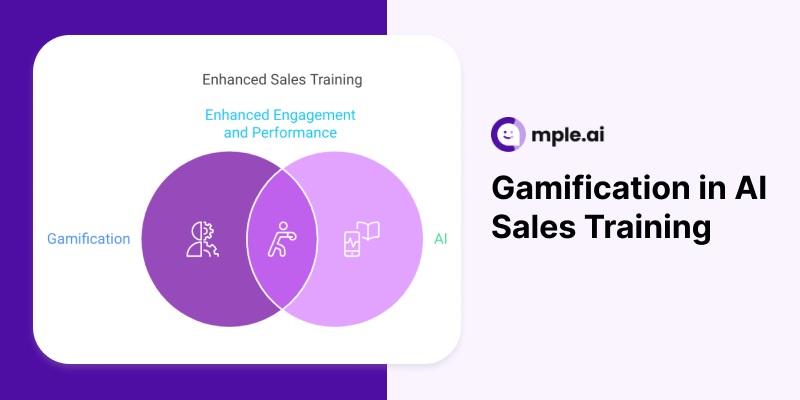
Gamification applies elements like points, leaderboards, badges, and rewards to non-game contexts. In sales training, it helps:
- Boost Engagement: Game-like mechanics make learning enjoyable, reducing monotony.
- Encourage Healthy Competition: Leaderboards and contests motivate reps to outperform their peers.
- Improve Retention: Repeated practice in a gamified format reinforces key concepts and skills.
- Drive Measurable Results: Clear objectives and feedback loops ensure training aligns with performance goals.
By incorporating these elements, gamification transforms mundane training sessions into interactive and exciting experiences.
How AI Elevates Gamified Sales Training
Artificial intelligence takes gamification to the next level by adding a layer of personalization and adaptability. Here’s how:
- Customizing Challenges and Rewards: AI analyzes each rep’s performance data to:
- Assign challenges that address specific skill gaps.
- Offer tailored rewards that resonate with individual motivations.
- Dynamic Difficulty Adjustment: AI ensures that training remains neither too easy nor too hard by dynamically adjusting the difficulty level based on a learner’s progress. This keeps participants engaged and ensures continuous skill development.
- Real-Time Feedback: Gamified AI systems provide instant feedback, allowing reps to:
- Identify areas for improvement.
- Track their progress against peers.
- Celebrate small wins, which boosts morale and confidence.
- Data-Driven Insights: AI tracks in-game behavior to:
- Identify patterns in learning styles.
- Recommend additional training or challenges.
- Offer actionable insights to managers for targeted coaching.
Gamification Elements in AI Sales Training
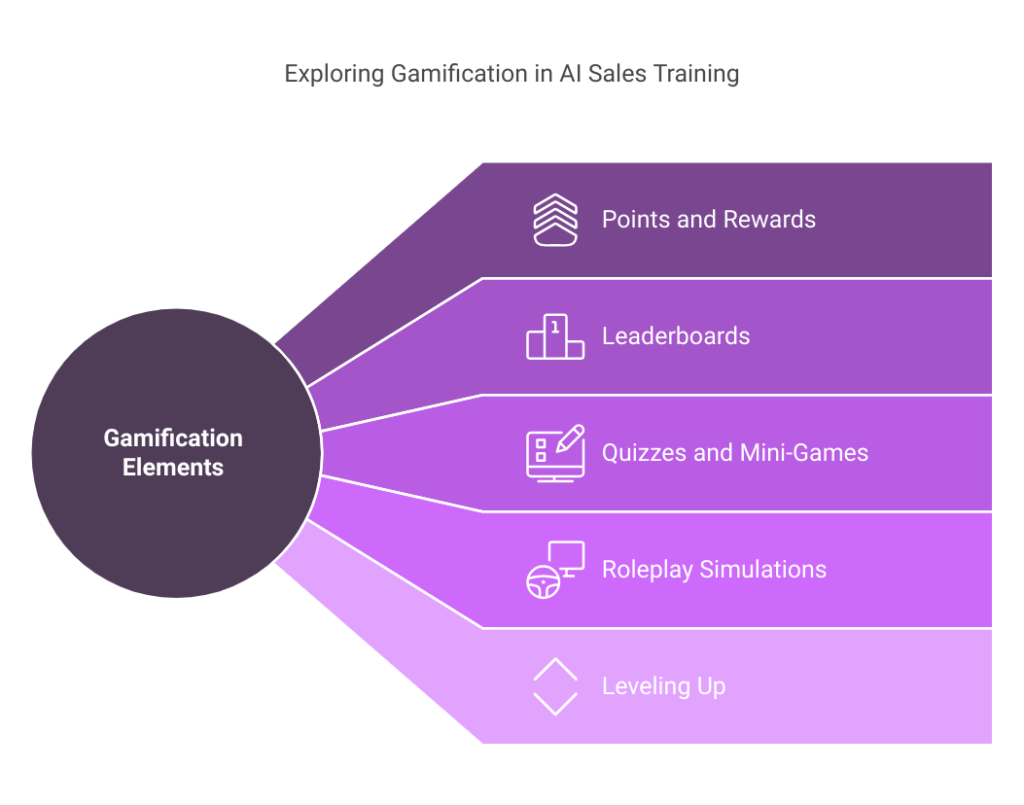
AI-powered gamification systems incorporate various game-like elements to enhance training effectiveness. Here are some key gamification elements used in sales training:
- Points and Rewards:
- Reps earn points for completing tasks, meeting sales milestones, or demonstrating specific skills.
- Rewards can include virtual badges, certificates, or real-world incentives like gift cards.
- Leaderboards:
- Foster healthy competition by ranking reps based on performance metrics.
- Encourage teamwork with group-based challenges.
- Quizzes and Mini-Games:
- Interactive quizzes and simulations test knowledge and skills in a fun, low-pressure environment.
- Roleplay Simulations:
- AI-powered roleplays replicate real-world scenarios, offering reps a chance to practice and refine their techniques.
- Leveling Up:
- Gamified systems feature progression tiers, where reps unlock new challenges and rewards as they advance.
Benefits of Gamified AI Sales Training
- Increased Engagement: Gamification transforms training into an enjoyable activity, making reps more likely to participate actively and consistently.
- Enhanced Knowledge Retention: Reps retain information better when training includes interactive and repetitive gamified elements.
- Improved Performance: Gamification drives measurable improvements by targeting specific skill gaps and encouraging consistent practice.
- Scalability: AI-driven gamification scales seamlessly, providing personalized experiences to teams of all sizes.
- Actionable Insights: Managers gain real-time visibility into individual and team performance, enabling targeted interventions.
Challenges in Implementing Gamified AI Training
- Integration Complexity: Aligning AI-powered gamification tools with existing training platforms and workflows can be challenging.
- Initial Investment: Implementing advanced gamified systems requires upfront investment in technology and training.
- Balancing Fun and Functionality: Overemphasis on gaming elements can detract from the primary goal of skill development.
- Change Management: Sales teams may need time and support to adapt to gamified training methods.
How mple.ai is Transforming Gamified Sales Training
mple.ai combines the power of AI and gamification to deliver engaging, effective sales training experiences. Here’s how:
- AI-Powered Roleplays: Reps practice real-world scenarios in an interactive, game-like format. Instant feedback highlights strengths and areas for improvement, accelerating skill development.
- Dynamic Leaderboards: Foster healthy competition by ranking reps based on performance metrics in roleplays and challenges. Reps climb the leaderboard by scoring reward points and competing with colleagues.
- Tailored Challenges: AI identifies individual skill gaps and assigns targeted, gamified exercises to address them. Progress tracking ensures reps stay motivated and aligned with their goals.
- Actionable Insights for Managers: Comprehensive dashboards offer visibility into team performance, enabling data-driven coaching and strategy adjustments.
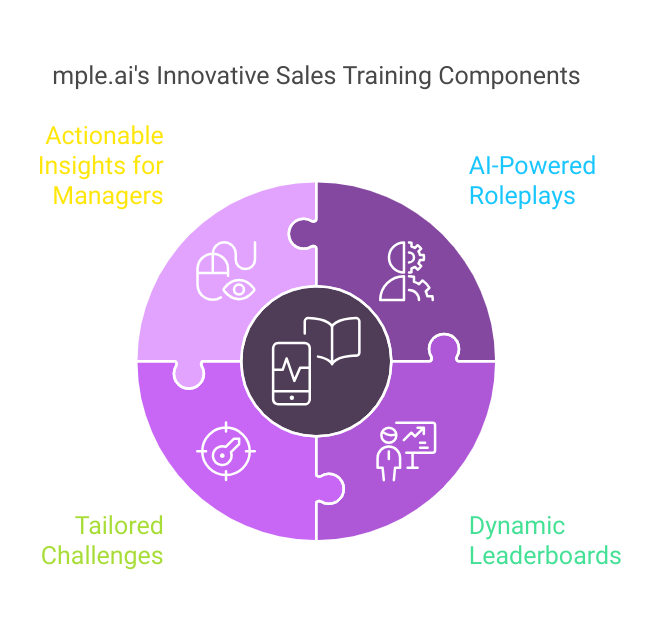
With mple.ai, organizations can create a hybrid training environment that blends gamification with cutting-edge AI to drive engagement and results.
Key Takeaways
- Gamification enhances engagement, motivation, and retention in sales training programs
- AI personalizes gamified learning experiences by adapting challenges and feedback to individual needs
- Elements like leaderboards, roleplay simulations, and rewards foster competitive learning
- Tools like mple.ai are setting new benchmarks by integrating gamification with AI-driven insights
Conclusion
Gamification in AI sales training is reshaping the way organizations develop their sales teams. By making learning interactive and personalized, companies can improve engagement, close skill gaps, and drive tangible performance gains. With platforms like mple.ai, the future of sales training is both fun and functional—empowering reps to excel in a competitive landscape.
If your sales team is ready for the next level, explore how gamified AI training can unlock their potential.
FAQs
- What is gamification in sales training? Gamification involves using game-like elements, such as points, leaderboards, and rewards, to make training more engaging and interactive.
- How does AI enhance gamified training? AI personalizes the experience by analyzing performance data, adjusting challenges dynamically, and providing real-time feedback.
- What are some examples of gamification in sales training? Examples include points-based quizzes, AI-driven roleplay simulations, leaderboards, and tiered progression systems.
- What industries benefit from gamified AI sales training? Industries like pharmaceuticals, technology, retail, and finance, where sales roles require ongoing skill development, benefit significantly.
- How does mple.ai support gamified sales training? mple.ai offers AI-powered roleplays, dynamic leaderboards, tailored challenges, and actionable insights to create engaging and effective training experiences.