In today’s competitive landscape, sales training is no longer a one-size-fits-all endeavor. Companies are increasingly adopting AI-powered solutions to deliver personalized and adaptive training experiences for their sales teams. While these innovations promise improved performance and efficiency, measuring the return on investment (ROI) remains a critical step to justify the adoption and continued use of AI-driven training programs
This blog will delve into the metrics and methodologies that organizations can use to evaluate the ROI of AI-powered sales training.
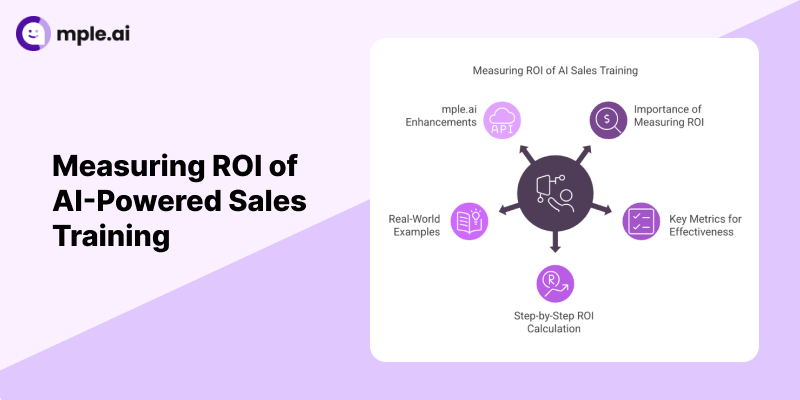
What You’ll Learn:
- The importance of measuring ROI for AI-powered sales training.
- Key metrics to evaluate training effectiveness.
- A step-by-step methodology to calculate ROI.
- Real-world examples of successful AI training programs.
- How platforms like mple.ai enhance ROI.
Why Measuring ROI Matters
Investing in sales training—especially AI-powered solutions—requires significant resources, including time, money, and effort. Measuring ROI helps organizations:
- Justify Investments: Demonstrate the value of AI training programs to stakeholders.
- Optimize Programs: Identify areas for improvement to enhance training effectiveness.
- Align with Business Goals: Ensure that training outcomes directly contribute to organizational objectives.
- Improve Decision-Making: Use data-driven insights to allocate resources more effectively.
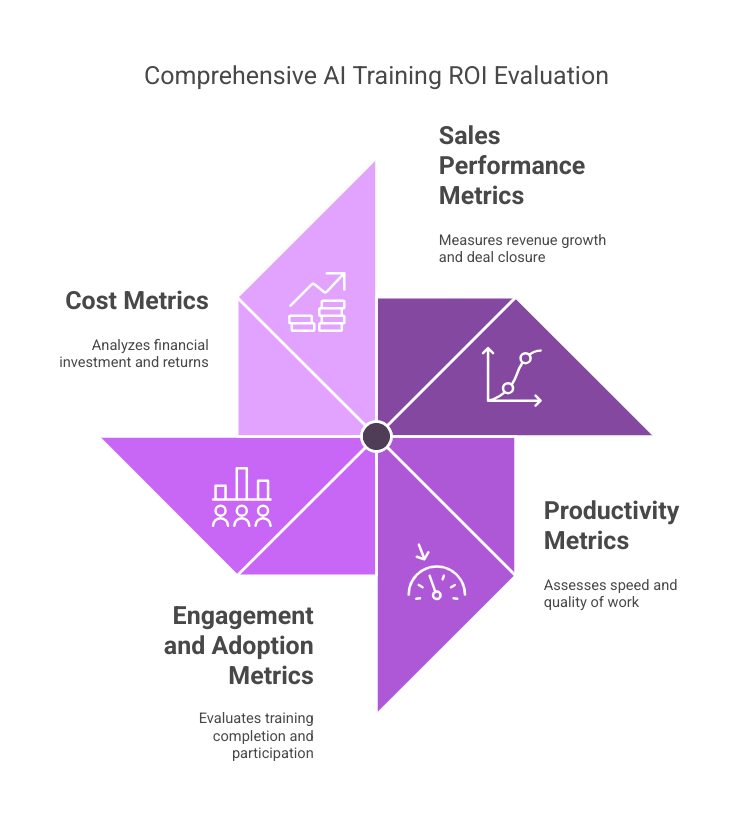
Key Metrics for Evaluating AI Training Effectiveness
To accurately measure ROI, organizations must track a combination of quantitative and qualitative metrics:
- Sales Performance Metrics
- Revenue Growth: Increase in sales directly attributable to trained reps.
- Conversion Rates: Improvement in closing deals after training.
- Average Deal Size: Growth in the value of deals closed by trained reps.
- Productivity Metrics
- Time to Proficiency: How quickly new hires or existing reps achieve desired performance levels.
- Call Effectiveness: Improvement in the quality of customer interactions.
- Pipeline Velocity: Faster movement of prospects through the sales funnel.
- Engagement and Adoption Metrics
- Training Completion Rates: Percentage of reps completing AI training programs.
- Engagement Scores: Active participation in simulations, quizzes, and role-plays.
- Feedback Ratings: Satisfaction scores from participants.
- Cost Metrics
- Training Costs: Total investment in AI tools, content, and implementation.
- Opportunity Cost: Time spent on training versus selling.
- Cost Per Rep: Average expense per trained sales representative.
Methodology for Calculating ROI
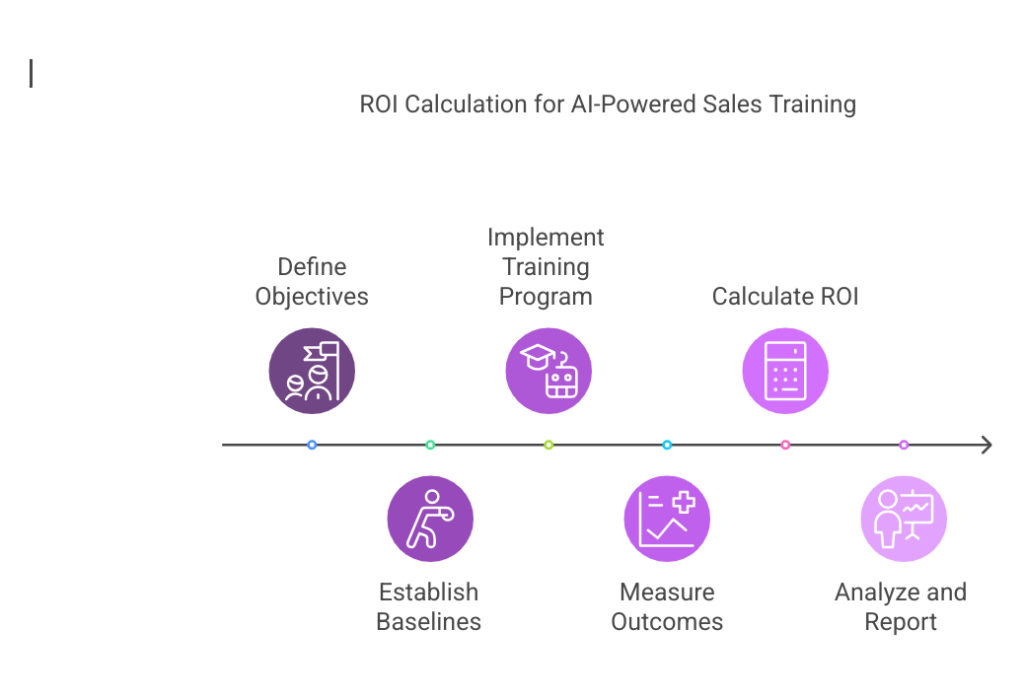
Measuring ROI for AI-powered sales training involves a structured approach:
- Define Objectives
- What specific outcomes do you want to achieve? Examples include boosting revenue, improving productivity, or enhancing engagement.
- Establish Baselines
- Gather pre-training data for metrics such as revenue, conversion rates, and call effectiveness.
- Implement Training Program
- Roll out the AI-powered training solution, ensuring that key performance indicators (KPIs) are tracked from the start.
- Measure Outcomes
- Compare post-training data to baseline metrics. Look for improvements directly attributable to the training program.
- Calculate ROI
- Use the formula:
- ROI = (Net Benefits / Cost of Training) × 100
- Where:
- Net Benefits = Revenue or cost savings generated due to training.
- Cost of Training = Total expenses related to the AI training program.
- Analyze and Report
- Present findings to stakeholders, highlighting successes and areas for improvement.
Real-World Examples
Pharmaceutical Sales Success
- AI role-play simulations: Trained sales team on handling complex objections.
- Key Results:
- 20% increase in revenue from HCPs.
- 35% improvement in objection-handling scores.
- ROI of 150% within six months of program launch.
Tech Sector Growth
- AI-powered microlearning modules: Upskilled sales reps on new product offerings.
- Key Results:
- Faster onboarding by 30%.
- Conversion rates improved by 25%.
- Training costs reduced by 40% compared to traditional methods.
How mple.ai Enhances ROI
1. Comprehensive Analytics
- mple.ai provides dashboards: Track performance metrics, enabling real-time ROI calculations.
2. Scenario-Specific Insights
- Tailored role-play simulations: Offer data on reps’ strengths and weaknesses, allowing targeted interventions.
3. Scalable Solutions
- The platform supports training for large teams: Ensures consistent outcomes without escalating costs.
4. Actionable Feedback
- Detailed post-simulation analysis: Helps reps improve quickly, reducing time to proficiency.
Key Takeaways
- Measuring ROI for AI-powered sales training is crucial to demonstrate value and optimize programs.
- Metrics like revenue growth, time to proficiency, and engagement scores offer actionable insights.
- A structured methodology ensures accurate ROI calculations.
- Platforms like mple.ai provide the tools needed for effective ROI measurement and enhanced training outcomes.
Conclusion
AI-powered sales training is transforming the way organizations upskill their teams. By leveraging robust metrics and methodologies, companies can not only measure the ROI of their training investments but also continuously refine their programs for maximum impact. Tools like mple.ai are at the forefront, offering comprehensive solutions to track and enhance training effectiveness.
Investing in AI sales training is more than a leap into the future—it’s a calculated step toward measurable success. Start your journey today.
FAQs
Why is ROI measurement important for sales training?
ROI measurement ensures that training programs deliver tangible business benefits, helping justify investments and guide decision-making.
What metrics are most important for evaluating AI-powered training?
Key metrics include revenue growth, conversion rates, time to proficiency, and training engagement levels.
How does mple.ai support ROI measurement?
mple.ai offers analytics dashboards, scenario-specific insights, and actionable feedback, enabling precise ROI tracking and improvement.
Can AI training replace traditional methods entirely?
AI training complements traditional methods, offering scalable, personalized, and data-driven solutions for enhanced outcomes.
What industries benefit most from AI-powered sales training?
Industries like pharmaceuticals, technology, and finance, where complex sales processes and regulatory considerations are prevalent, benefit significantly from AI-driven training.