Overview
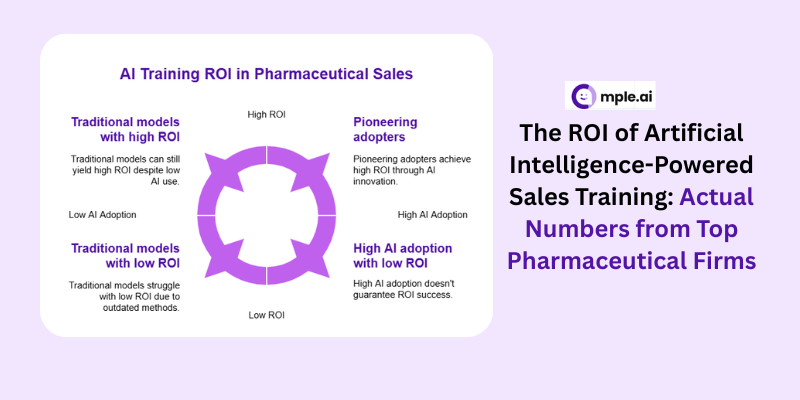
With the pharmaceutical industry increasingly competitive and digitally transformed, the pressure is mounting for companies to make their sales teams operationally efficient. Conventional training programs, while essential, are no longer providing the agility and insight needed to lead the pack. That is where AI-driven sales training comes in. This blog discusses the measurable ROI that pharmaceutical companies are realizing through their use of AI-based training solutions. From the measurement of sales performance to gains in terms of compliance and the pace of onboarding, actual facts reveal how AI is transforming the effectiveness of training.
What You’ll Learn:
- Why do traditional models in training fail in the current pharmaceutical industry?
- Measuring the effectiveness of the training of AIs using real-world data.
- Key performance indicators affected by AI-powered coaching.
- Pharmaceutical sales analytics insights from pioneering adopters.
- Best practices to achieve the highest ROI from AI-based training systems.
1. The Evolution of Pharma Sales Training
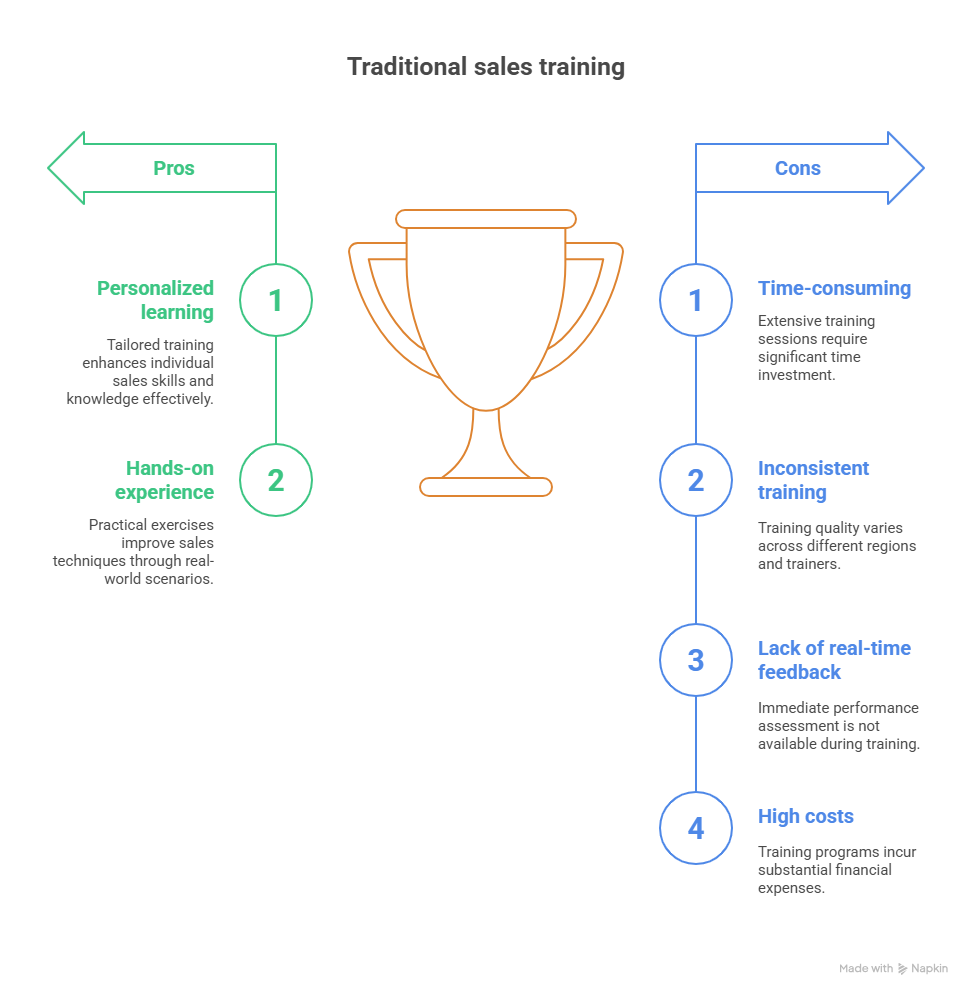
Pharmaceutical representatives have used in-person workshops, printed guides, and occasional coaching meetings for decades. Effective as they have proved in the past, they are:
- Time-consuming and hard to scale.
- Prone to inconsistency in territories.
- Not able to monitor real-time performance enhancements.
- Expensive with dubious ROI.
AI-facilitated training overcomes these limitations directly through providing:
- Adaptive learning paths based on rep performance.
- Real-time simulations and feedback.
- Continuous data tracking and analytics.
- Personalized coaching at scale.
2. How to Measure the Effectiveness of AI Training
Pharmaceutical business firms considering the ROI of their selling training using AI usually monitor the following key metrics:
- Sales Performance Metrics:
- Boost in rep performance metrics (calls, conversions, closed business).
- Revenue from higher territory.
- Improved engagement scores from HCPs (healthcare professionals).
- Return on Training Investment:
- Decrease rep onboarding time by 30-50%.
- Decreased cost per trained representative through virtual, replicable simulations.
- Shorter time-to-competency than the conventional models.
- Compliance and Risk Management:
- Decrease in off-label messaging occurrences.
- Improved completion rates of regulatory modules.
- Improved audit-readiness through automated tracking.
3. Real-World Pharma Sales Data: Companies That Are Reporting
A number of pharmaceutical leaders have used AI-enabled training platforms and made quantifiable outcomes available.
Case Study 1: Global Biotechnology Company
- Challenge: Slow onboarding and inconsistent field messaging.
- Solution: Integrated simulations using AI.
- Results:
- 45% faster onboarding.
- 33% improvement in early-stage deal closing.
- 20% decrease in cases of violations.
Case Study 2: Mid-sized Pharma Company
- Challenge: Low retention and low-performing regions.
- Solution: AI-driven performance analysis and personalized coaching.
- Results:
- 18% increase in rep retention.
- 25% increase in sales productivity.
- Boosted HCP satisfaction by 30%.
These results highlight the fact that AI solutions do more than just train reps—they optimize the entire selling ecosystem.
4. Pharmaceutical Sales Analytics: Using Data to Guide Strategy
Contemporary AI platforms monitor thousands of points of data to produce usable insights such as:
- Call effectiveness across product line.
- Improvement over a period.
- HCP sentiment analysis.
- Message accuracy and alignment.
- Forecasting accuracy based on rep readiness.
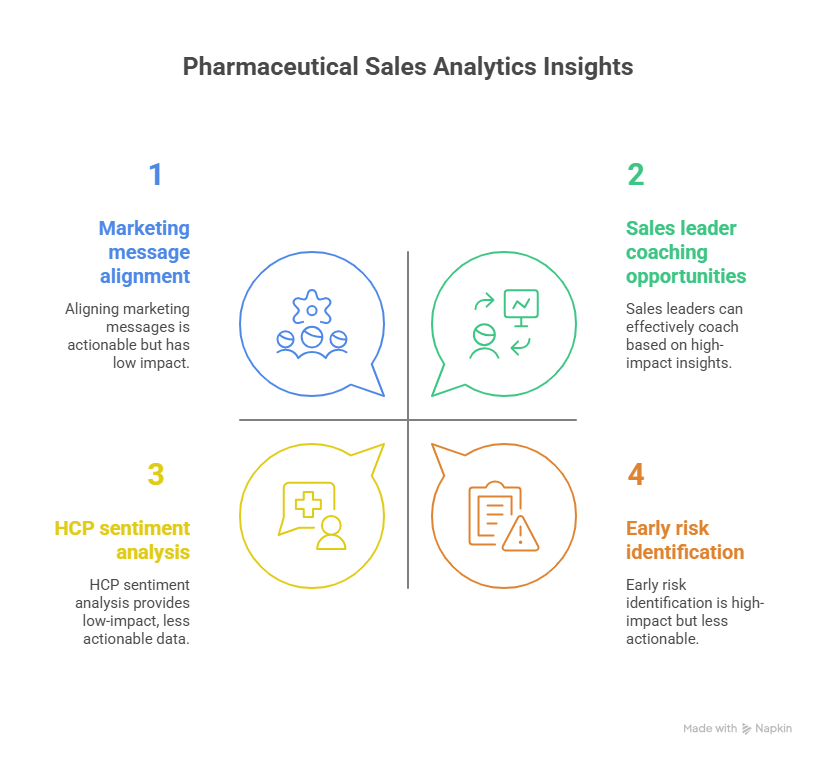
These analytics assist:
- Sales leaders recognize coaching chances.
- Aligning marketing messages with field realities.
- Compliance departments identify risks early.
5. Maximizing ROI from AI Sales Training
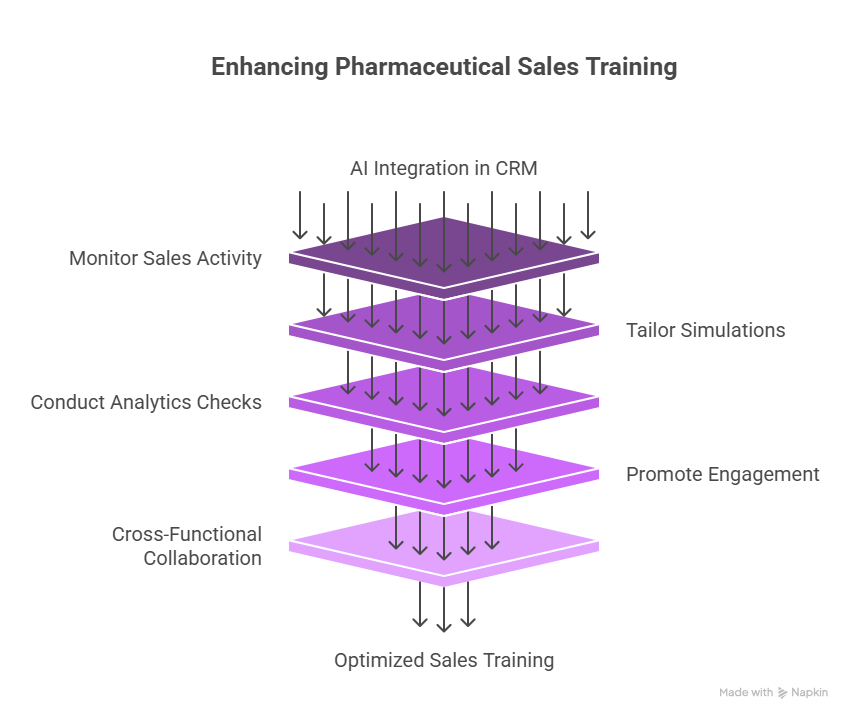
Achieving the highest ROI entails more than just deployment. Here are the top pharmaceutical industry companies’ best practices:
- Implement AI within CRM systems to monitor sales activity and the impact of learning.
- Tailor training simulations to mimic actual market conditions and objections.
- Hold periodic analytics checks to make real-time adjustments to strategy.
- Promote rep engagement through gamification and progress dashboards.
- Work across functions with training, marketing, and regulatory teams.
How MPLE AI Helps Maximize ROI in Pharma Sales Training
Mple AI is purpose-built to help pharmaceutical companies achieve superior ROI from their sales training programs. With advanced AI simulations, MPLE delivers personalized, compliance-safe virtual roleplays that replicate real-world HCP interactions. The platform tracks rep performance at scale, analyzes communication for effectiveness, and provides instant, actionable feedback. MPLE integrates seamlessly with your CRM and LMS, allowing you to measure the direct business impact of training on sales outcomes. Whether you’re accelerating onboarding, reducing compliance risks, or optimizing coaching, MPLE ensures your reps are field-ready faster—and performing with greater precision. It’s not just training—it’s transformation through data, intelligence, and customization.
Key Takeaways
- Traditional training models are no longer suitable in today’s fast-moving pharmaceutical world.
- AI-facilitated training provides quantifiable performance boosts in productivity, regulatory compliance, and HCP interaction.
- Pharma industry leaders’ real-world data demonstrate up to 50% more accelerated onboarding and 30%+ improvements in performance metrics.
- Analytics and ongoing improvement are key to optimizing the ROI from AI sales coaching.
- Success is achieved through departmental alignment and adherence to fact-based strategy.
Conclusion
On the competitive landscape of pharmaceutical selling, precision and performance matter the most. A new way forward exists through the use of AI-facilitated training—based in quantifiable effect, customized instruction, and immediate measurement. If you’re still using legacy training techniques, it’s time to rethink. The ROI for AI-driven pharmaceutical industry sales training is not just a potential—it’s already a documented benefit for forward-thinking companies ready to lead the future.
Ready to rethink your pharma sales training? Book a demo with Mple AI today!
FAQs
1. What is the typical ROI for AI-driven sales training in pharma?
Top firms achieve 30 to 50% ROI improvements in productivity and time-to-competency.
2. How soon can we expect to notice the effects of using AI training tools?
Most companies indicate measurable benefits within 3 to 6 months from deployment.
3. Will AI training tools substitute human trainers?
Not wholly so. AI supplements human trainers in terms of scale and data evaluation, with trainers concentrating on customized coaching and strategy.
4. Are AI trainings compliant with pharmaceutical regulations?
Yes. Most platforms are developed considering regulatory frameworks and also assist in minimizing non-compliance events.
5. What should be the initial step in launching AI-driven sales training?
Begin with a pilot program in onboarding or product training and assess the data before refining your method and expanding slowly across the teams.