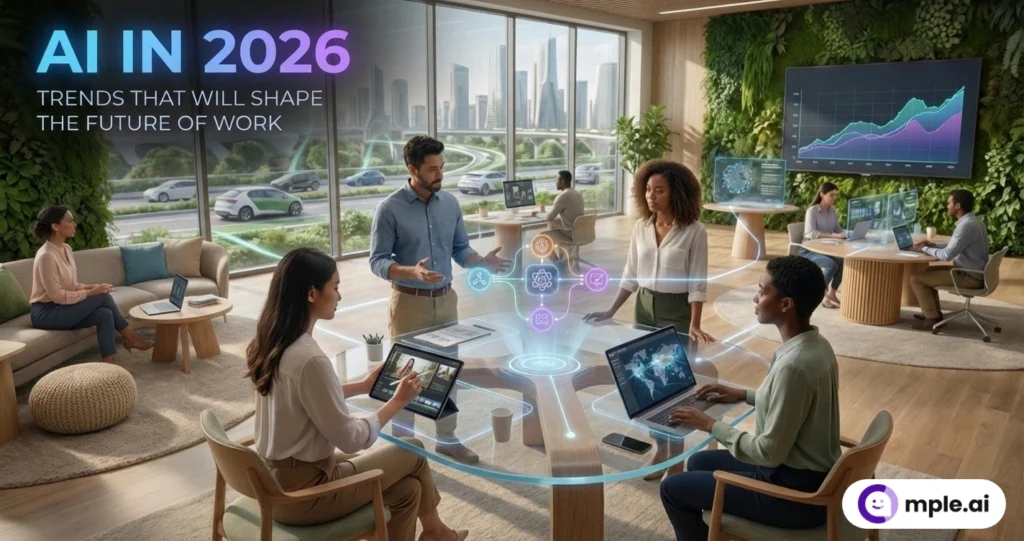
Artificial intelligence is no longer an experiment running on the side of business operations. By 2026, AI will sit at the core of how work gets done—how people are hired, trained, supported, evaluated, and enabled to perform better. For leaders, founders, HR teams, and functional heads, the real question is no longer whether to use AI, but how to apply it responsibly and effectively to everyday work.
This blog breaks down the most important AI trends expected to shape the future of work in 2026. Each trend focuses on practical impact, real use cases, and what organizations should start preparing for now.
Why 2026 Is a Turning Point for AI at Work
Between 2023 and 2025, most organizations experimented with AI in pockets—chatbots, content generation, basic automation, or analytics. By 2026, three shifts will define the workplace:
- AI moves from tools to work companions
- Skills and decision-making matter more than job titles
- Human performance becomes measurable beyond outputs
Research from organizations like McKinsey & Company and World Economic Forum consistently points to the same outcome: AI will change how work is done faster than it changes what work exists
1. AI Will Become a Day-to-Day Work Companion
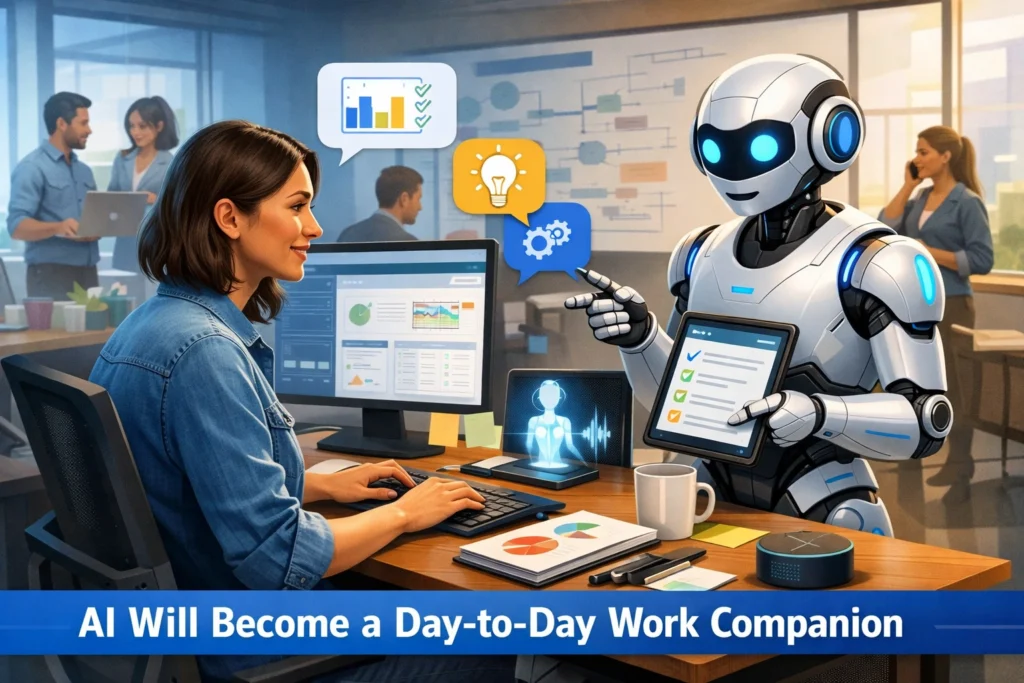
In 2026, AI will no longer feel like a separate system employees need to “use.” It will function as a background companion that supports daily tasks across roles.
What this looks like in practice:
- Sales reps receive guidance during customer conversations
- Managers get decision prompts based on patterns, not dashboards
- HR teams review candidate shortlists generated from role-specific criteria
- Frontline staff practice conversations before facing real customers
Unlike earlier automation tools, these systems will interact using natural language and contextual understanding. The value comes from supporting judgment, not replacing it.
What leaders should prepare for
- Redefining workflows around human–AI collaboration
- Training employees to question and validate AI suggestions
- Setting boundaries on where AI assists and where humans decide
2. Skills-Based Work Will Replace Role-Based Work
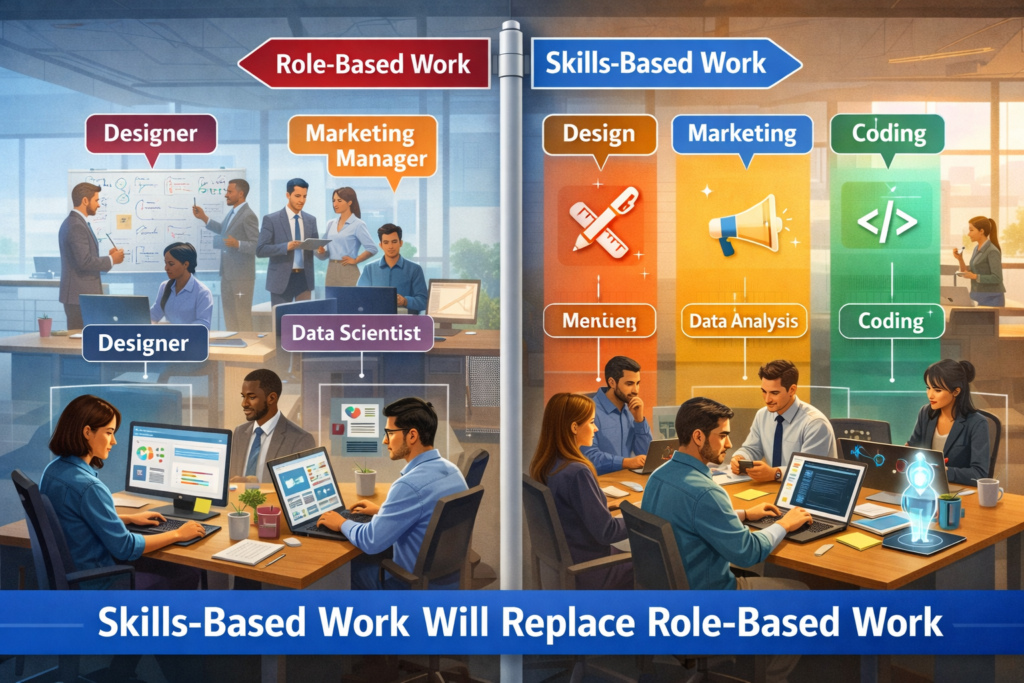
Job descriptions are becoming outdated. By 2026, organizations will increasingly hire, train, and deploy people based on skills rather than fixed roles.
AI systems will
- Map employee skills from work outputs, simulations, and assessmentsstions
- Identify gaps at an individual and team level
- Recommend targeted learning instead of generic training programs
According to Gartner, organizations that adopt skills-based models see better workforce mobility and faster adaptation to change.
Why this matters:
- Employees gain clearer growth paths
- Managers assign work based on capability, not availability
- Learning budgets shift from content creation to capability building
3. Hiring Will Focus on Capability, Not Credentials
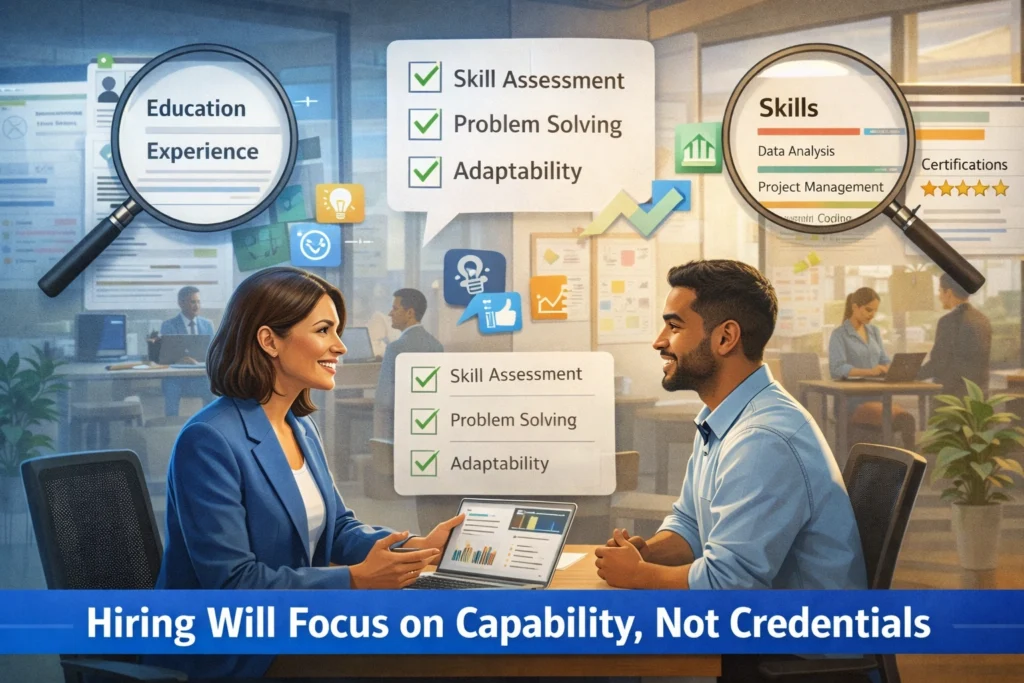
Resumes and degrees will lose influence as AI-driven assessments gain trust. By 2026, hiring decisions will increasingly rely on how candidates perform in realistic scenarios.
Key changes in hiring
- Scenario-based interviews using AI-driven simulations
- Evaluation of communication, reasoning, and judgment
- Reduced bias through standardized assessment criteria
Organizations like Harvard Business Review have highlighted that traditional hiring methods fail to predict on-the-job performance. AI-based assessments address this gap by testing real capability.
For candidates: preparation shifts from memorization to practice
For employers: hiring becomes faster and more defensible
4. Learning Will Shift From Content to Practice
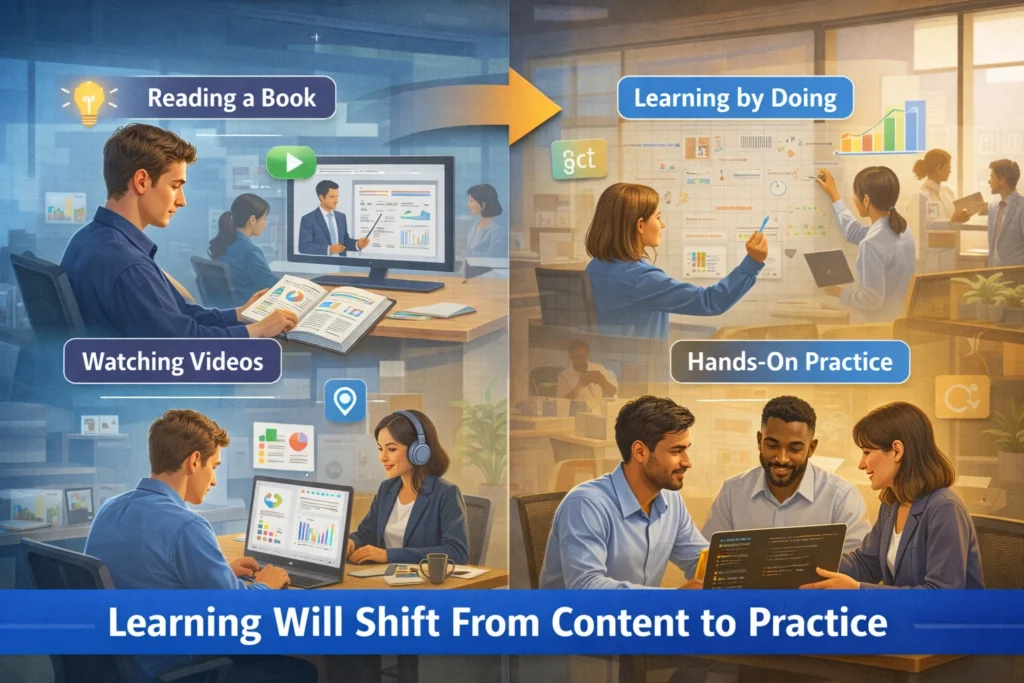
Corporate learning has long struggled with engagement and real-world application. In 2026, AI will move learning away from passive content toward active practice.
What changes
- Employees practice conversations, decisions, and problem-solving
- AI provides structured feedback after each attempt
- Progress is tracked through improvement, not completion
This approach directly addresses a major pain point: employees forget most training content because they never apply it. Practice-based learning improves retention and confidence.
Actionable takeaway for L&D teams
- Measure readiness, not attendance
- Design learning around real job situations
- Use AI feedback to personalize coaching
5. Managers Will Use AI for Better People Decisions
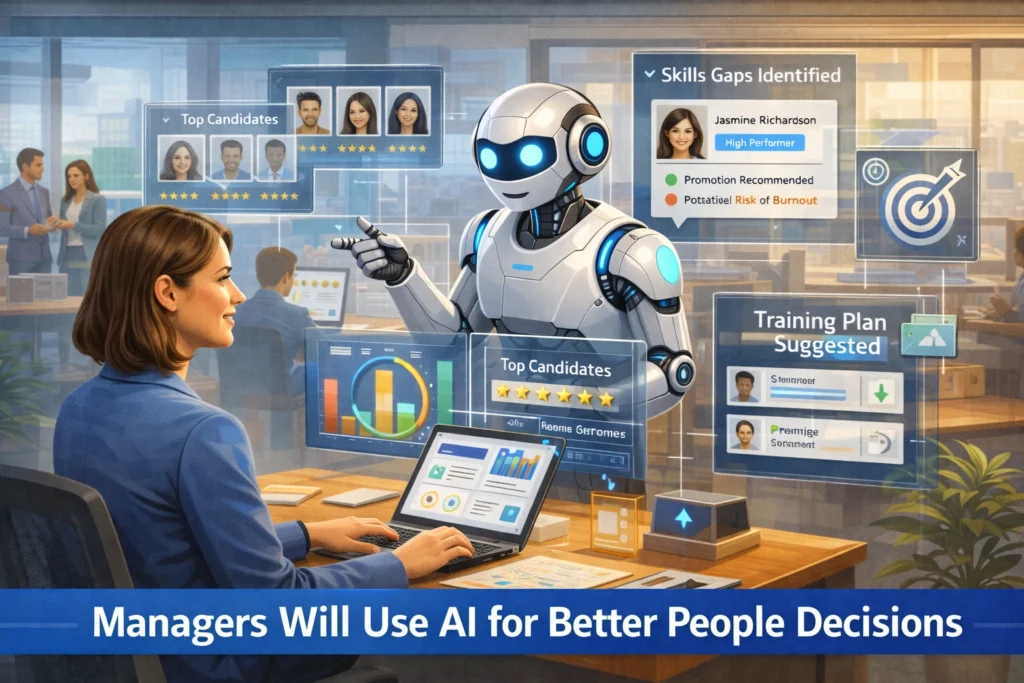
People management remains one of the hardest parts of leadership. By 2026, AI will help managers make more informed decisions without turning people into numbers.
AI systems will assist managers by:
- Highlighting coaching needs based on behavior patterns
- Identifying early signs of disengagement
- Suggesting development actions tied to outcomes
Importantly, these tools will focus on signals, not surveillance. Ethical implementation will be a key differentiator between organizations that gain trust and those that lose it.
6. AI Governance Will Become a Board-Level Topic
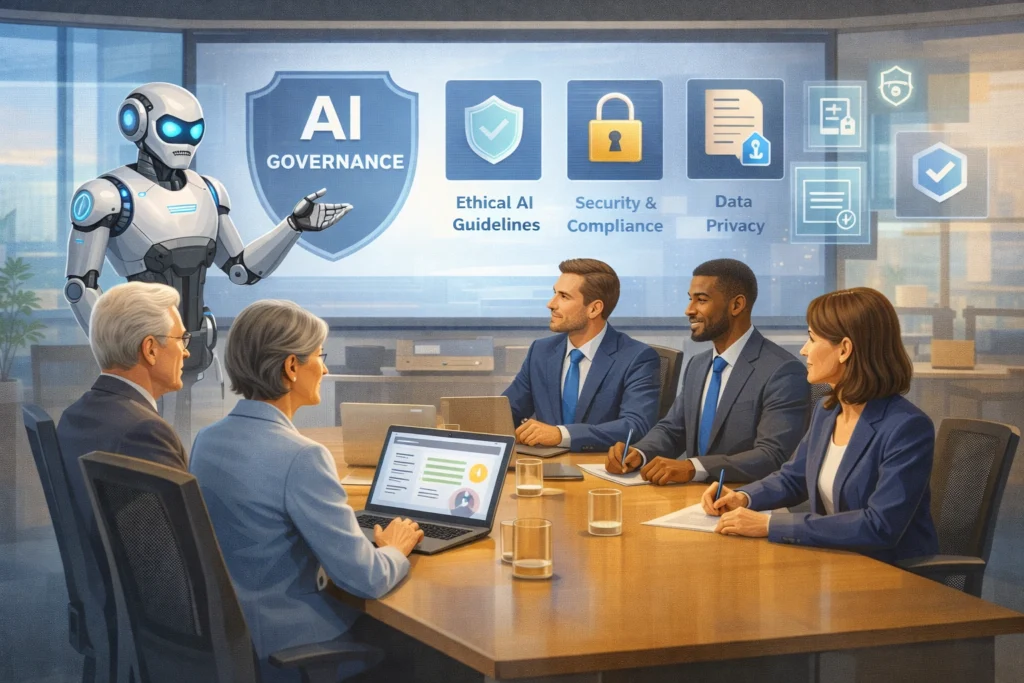
As AI becomes embedded in work, governance will move from IT teams to leadership agendas. By 2026, organizations will need clear policies on:
- Data usage and consent
- Explainability of AI decisions
- Accountability when AI exposes risk
- Compliance with evolving regulations
Frameworks from bodies like the OECD are already shaping how enterprises approach responsible AI.
Key insight:
Trust will become a competitive advantage. Employees and customers will favor organizations that are transparent about how AI is used.
7. Productivity Will Be Measured Differently
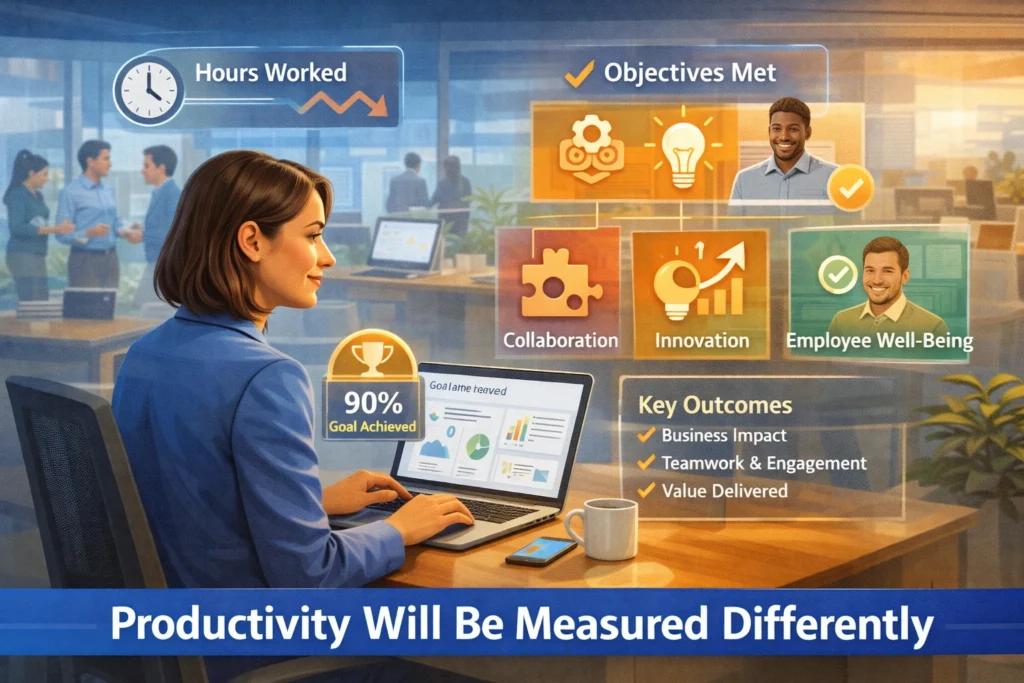
Traditional productivity metrics focus on output: hours worked, tasks completed, and revenue generated. AI enables a deeper view by measuring how work happens.
By 2026, organizations will track:
- Quality of decision-making
- Consistency of execution
- Improvement over time
- Capability growth at individual and team levels
This shift benefits high performers who often go unnoticed in output-only systems and helps organizations identify coaching opportunities earlier.
8. The Human Advantage Will Become Clearer
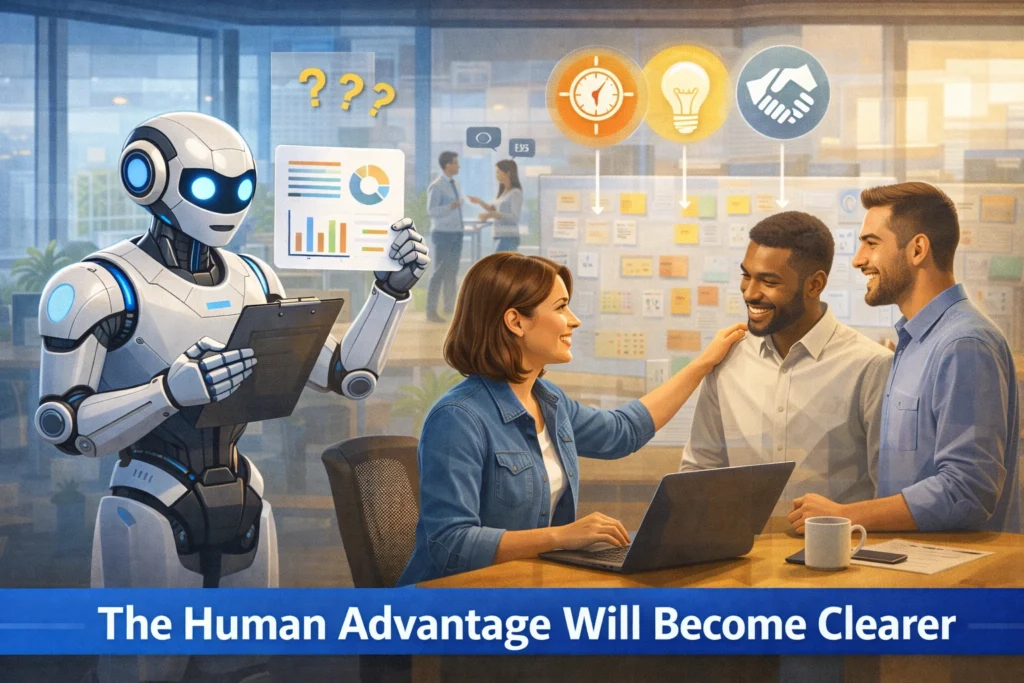
AI will take over repetitive tasks, analysis, and pattern recognition. What remains distinctly human will gain value:
- Judgment in ambiguous situations
- Empathy in conversations
- Ethical reasoning
- Creative problem framing
The future of work is not about humans competing with AI. It is about humans working with AI to perform at a higher level.
Organizations that invest only in tools without investing in people will struggle to see meaningful returns.
How Organizations Should Prepare for AI in 2026
Here is a practical checklist leaders can act on today:
| Focus Area | What to Do | Why It Matters in 2026 |
|---|---|---|
| Workflow Design | Audit workflows to identify where human judgment is required | Ensures AI supports decision-making instead of replacing critical thinking |
| Learning & Development | Shift training budgets toward practice and coaching | Improves on-the-job readiness and real-world skill application |
| Talent Strategy | Adopt skills-based frameworks across roles | Enables role flexibility and capability-driven growth |
| AI Governance | Set AI usage guidelines early and communicate them clearly | Builds trust, reduces risk, and supports ethical AI adoption |
| People Leadership | Upskill managers to work with AI insights responsibly | Helps leaders make informed decisions without over-reliance on AI |
FAQs: AI and the Future of Work
Will AI replace jobs by 2026?
AI will change tasks faster than it replaces roles. Jobs that rely on judgment, communication, and decision-making will evolve rather than disappear.
Which roles will see the biggest impact?
Sales, customer support, HR, operations, and frontline management will experience the fastest adoption due to clear performance signals.
Is AI adoption expensive for organizations?
Costs depend on use cases. Practice-based learning and decision support often deliver faster returns than large system overhauls.
How can employees stay relevant?
Focus on building problem-solving ability, communication skills, and adaptability. These skills work well alongside AI systems.