From onboarding to AI-enabled coaching, discover a step-by-step approach to training retail sales associates. Get KPI insights, program ideas, and see how mple AI helps cut onboarding time and increase sales.
Why Retail Sales Associate Training Matters More Than Ever
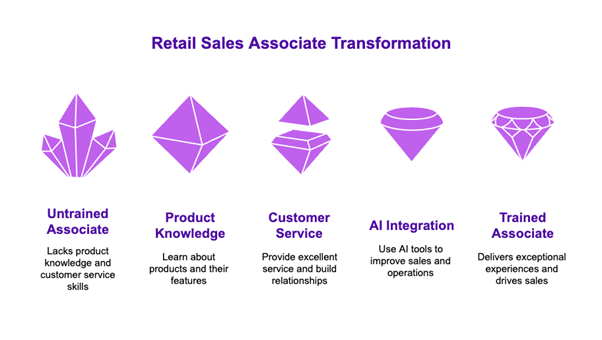
The retail landscape is undergoing rapid transformation. Customers expect faster service, deeper product knowledge, and memorable in-store experiences.
73% of customers expect store associates to be as knowledgeable as online product reviews.
80% of retailers have adopted or are piloting AI tools to improve sales and operations.
Physical retail must now offer experience, not just transactions, to compete with e-commerce.
💡 Bottom line: In today’s market, training isn’t optional — it’s a growth engine.
How Retail Sales Coaching Has Evolved
Then (Old Approach):
- 1–3 day onboarding sessions.
- Shadowing senior staff.
- Feedback based on manager gut-feel.
Now (Modern Coaching):
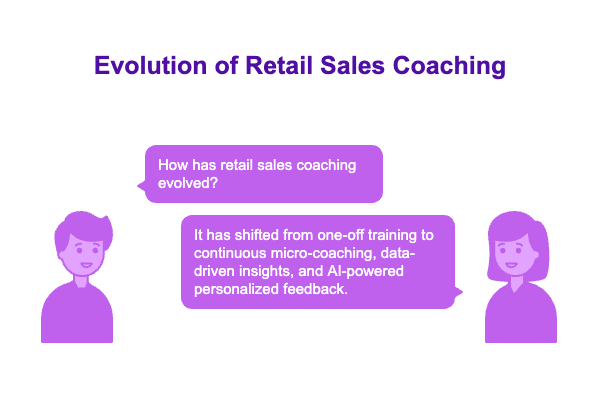
- Continuous micro-coaching instead of one-off training.
- Data-driven insights to identify specific skill gaps.
- AI and mobile learning tools for personalized, scalable feedback.
📌 The shift: Training is now ongoing, measurable, and highly targeted.
Key KPIs for Effective Retail Coaching
Tracking the right metrics ensures coaching drives results:
| KPI | What It Measures | Why It’s Important |
|---|---|---|
| Sales Conversion Rate | % of visitors who buy | Core measure of selling skill |
| Average Transaction Value (ATV) | Avg. spend per purchase | Reflects upsell success |
| Attach Rate | % of sales with add-ons | Increases margins |
| Units Per Transaction (UPT) | Items sold per customer | Shows cross-selling strength |
| Time-to-Competency | Time to hit performance goals | Faster ramp = lower cost |
| Customer Satisfaction (CSAT) | Post-interaction ratings | Predicts loyalty & repeat business |
📊 Example: A fashion retailer improved ATV by 18% in just 3 months after targeted upsell training.
Core Development Programs for Retail Associates
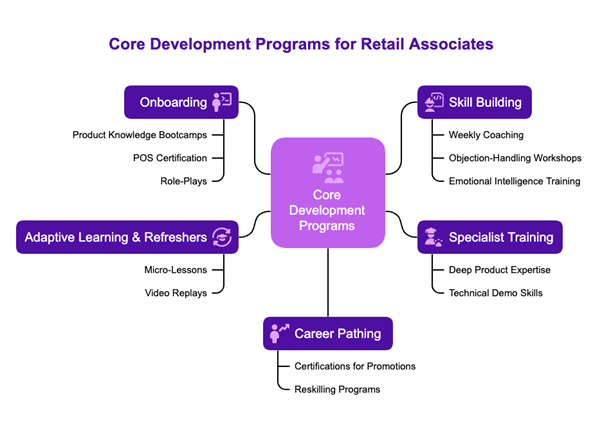
To create top-performing teams, companies should focus on:
1. Onboarding (Weeks 0–4):
- Product knowledge bootcamps.
- POS and store process certification.
- Role-plays for common customer scenarios.
2. Skill Building (Months 1–6):
- Weekly coaching cycles.
- Objection-handling workshops.
- Emotional intelligence training.
3. Specialist Training (Ongoing):
- Deep product expertise for key categories.
- Technical demo skills for electronics and appliances.
4. Adaptive Learning & Refreshers:
- Short micro-lessons before peak hours.
- Video replays of excellent customer interactions.
5. Career Pathing:
- Certifications tied to promotions.
- Reskilling programs for tech-driven roles.
The Role of AI-Enabled Coaching Platforms
AI transforms training from “one-size-fits-all” to “custom-fit learning”.
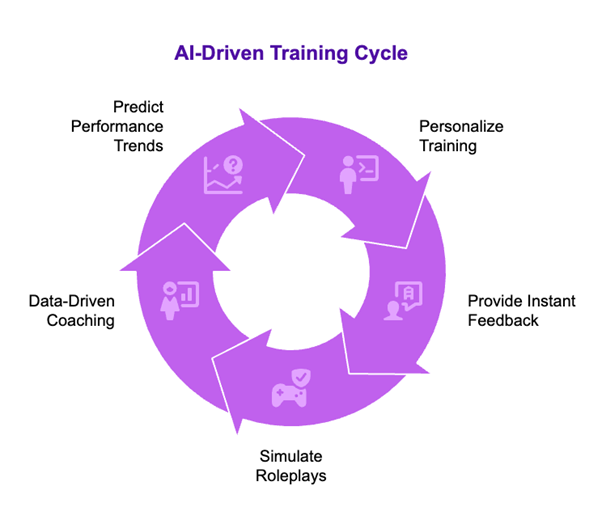
How AI Helps:
- Personalizes training for each associate based on KPIs.
- Provides instant feedback after interactions.
- Simulates customer roleplays for safe skill practice.
- Gives managers data-driven coaching priorities.
- Predicts performance trends to prevent missed targets.
Impact from early adopters:
- 25–30% faster time-to-competency.
- 15%+ improvement in sales conversion.
- 40% more coaching sessions completed — without extra manager hours.
How mple AI Can Accelerate Retail Training
mple AI bridges the gap between training and real-world performance:
- Scenario-Based Learning: Practice real customer situations with AI-driven simulations.
- Live Coaching Support: Real-time prompts during sales interactions.
- Performance Dashboards: Clear KPI tracking for staff and managers.
- Customized Coaching Plans: AI tailors learning for each store and individual.
- Bite-Sized Micro-Learning: 3–5 minute lessons before shifts to reinforce skills.
📌 Case Example: An electronics retailer using mple AI cut onboarding time from 6 weeks to 3 weeks and boosted ATV by 20%.
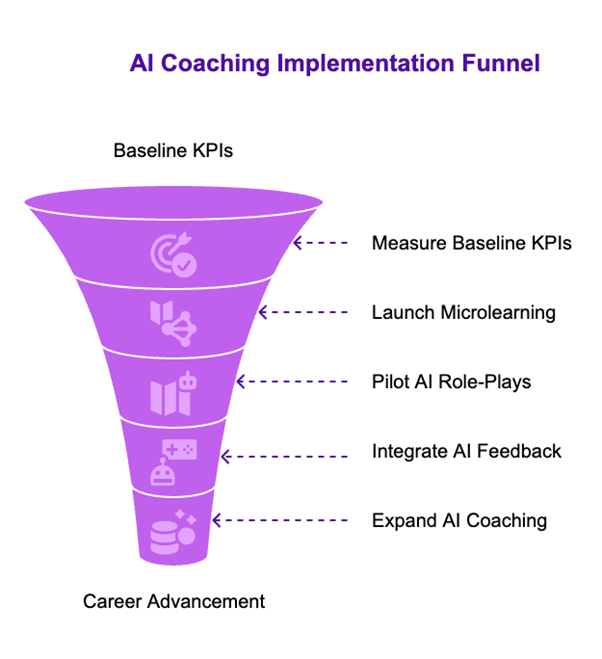
180-Day AI-Powered Coaching Roadmap
Days 0–30:
- Measure baseline KPIs.
- Launch product microlearning.
- Pilot AI role-plays in one location.
Days 31–90:
- Add AI feedback into daily huddles.
- Run weekly coaching sessions.
- Track ATV and attach rate improvement.
Days 91–180:
- Expand AI coaching to all stores.
- Reward top learners.
- Tie coaching to career advancement.
FAQs on Retail Coaching & AI
Q1: Will AI replace human coaches?
No. AI supports coaches with insights but can’t replace empathy, motivation, and leadership.
Q2: Is AI training costly?
Costs vary, but many retailers see ROI in months due to better sales and reduced turnover.
Q3: How do I measure success?
Track metrics like time-to-competency, ATV, attach rate, and CSAT before and after AI rollout.
Q4: Will staff accept AI tools?
Yes, when presented as a support tool to help them hit incentives, not as surveillance.
Q5: Can small chains benefit?
Absolutely — AI coaching scales for both single-store and multi-store operations.
💡Final Takeaway:
The most successful retailers blend human coaching with AI-powered insights. With a platform like mple AI, training becomes measurable, personalized, and directly tied to sales results turning every associate into a confident, high-performing brand ambassador.