In the Ever-Evolving World of Sales, techniques that genuinely connect with customers and address their needs stand out. One such methodology is SPIN Selling, a proven framework that has transformed the way sales professionals approach their conversations. By focusing on understanding and addressing customer needs, SPIN Selling ensures that your solutions align perfectly with what your clients are seeking.
What You’ll Learn
By the end of this blog, you’ll gain a clear understanding of:
- What SPIN Selling is and how it works
- The four-question framework of SPIN Selling.
- How to apply SPIN Selling to transform your sales strategy.
- The benefits of adopting a customer-centric sales approach.
- Real-world examples of SPIN Selling in action.
- Tips to implement SPIN Selling effectively in your team.
What Is SPIN Selling?
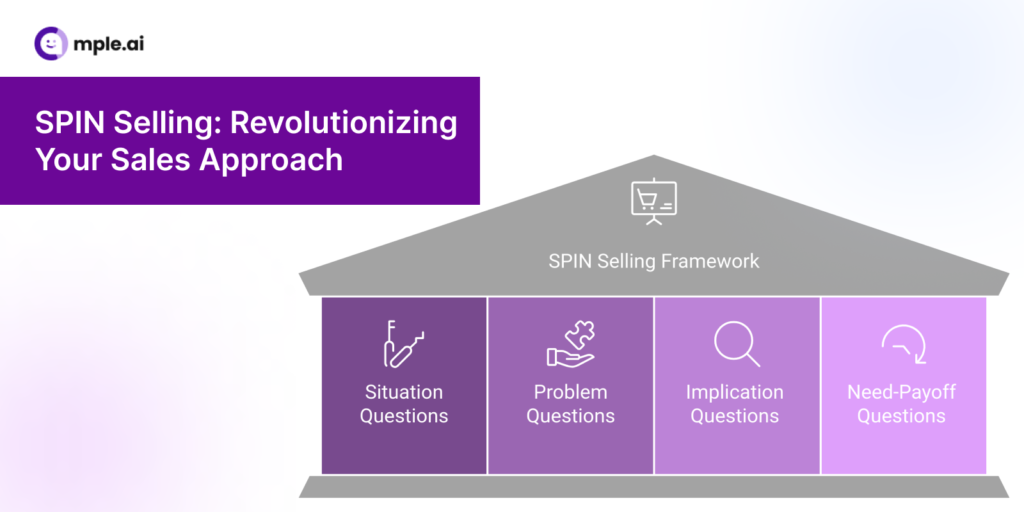
SPIN Selling is a sales technique introduced by Neil Rackham in his groundbreaking book, SPIN Selling. The methodology is based on extensive research involving over 35,000 sales calls, making it one of the most scientifically validated sales approaches. The framework revolves around four types of questions that salespeople can use to uncover customer needs and guide them toward making a buying decision:
- Situation Questions
- Problem Questions
- Implication Questions
- Need-Payoff Questions
Each type of question plays a crucial role in building a meaningful conversation, uncovering deep insights, and moving the sales process forward.
Breaking Down the SPIN Framework
1. Situation Questions
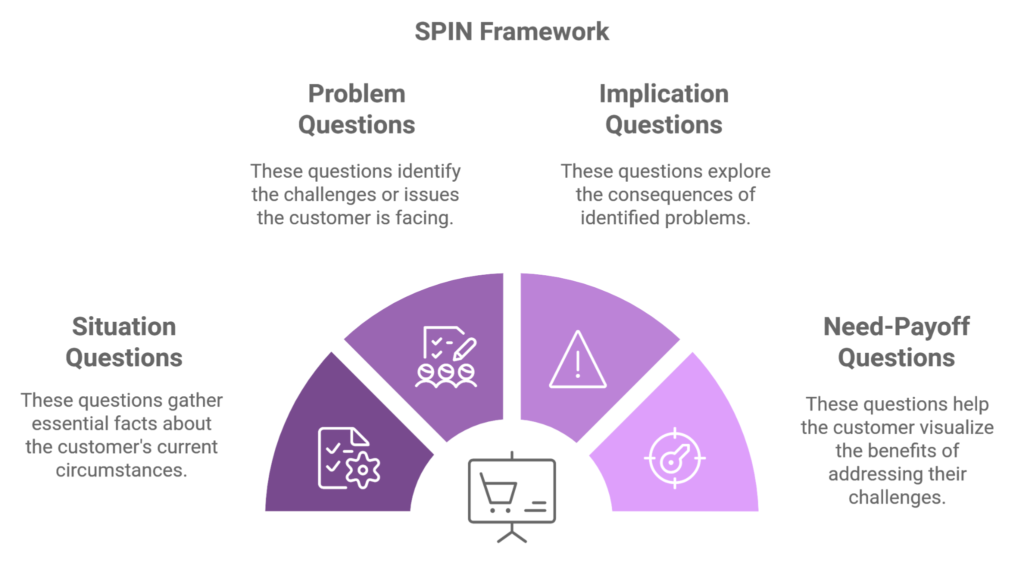
These questions aim to gather facts about the customer’s current circumstances. They help you establish context and gain a clear understanding of the buyer’s environment. Examples include:
- What tools are you currently using to manage your sales pipeline?
- How do you track your team’s performance?
- What’s your typical sales cycle duration?
However, excessive Situation Questions can bore the prospect, so it’s essential to balance them with more engaging questions as the conversation progresses.
2. Problem Questions
Once the groundwork is laid, the focus shifts to identifying the challenges or issues the customer is facing. These questions help uncover pain points and dissatisfaction with the current situation. Examples include:
- Are you satisfied with the accuracy of your sales forecasts?
- Do you face difficulties in managing remote teams effectively?
- What challenges do you encounter in closing high-value deals?
Problem Questions make prospects aware of their needs, creating an opportunity for you to position your solution as the answer.
3. Implication Questions
Implication Questions delve deeper into the identified problems, exploring their consequences and emphasizing their urgency. They are crucial in helping the customer realize the broader impact of their issues. For instance:
- How does the lack of accurate forecasts impact your revenue planning?
- What happens if these challenges persist over the next year?
- How do delays in your sales process affect customer satisfaction?
These questions encourage prospects to think critically about the cost of inaction, paving the way for discussing solutions.
4. Need-Payoff Questions
The final step is to help the customer visualize the benefits of addressing their challenges. Need-Payoff Questions shift the focus to the solution and its value. Examples include:
- Would having a more accurate forecasting tool help you allocate resources more effectively?
- How would resolving these issues improve your team’s efficiency?
- What value would you place on reducing your sales cycle by 20%?
These questions lead the prospect to articulate the value of solving their problems, making them more receptive to your offering.
Why SPIN Selling Works
The SPIN Selling framework is effective because it prioritizes the customer’s needs over aggressive sales tactics. Here’s why it works:
- Customer-Centric Approach: SPIN Selling focuses on understanding the customer’s challenges and goals, building trust and rapport.
- Structured Conversations: The systematic framework ensures no critical aspect of the sales process is overlooked.
- Solution-Oriented Discussions: The salesperson positions their offering as the natural answer to the customer’s problems, rather than pushing a product.
- Scalable for Complex Sales: SPIN Selling is particularly effective for high-value, B2B sales involving multiple stakeholders and lengthy decision-making processes.
Real-World Examples of SPIN Selling
Example 1: Selling a CRM Software
Imagine you’re selling a CRM tool. Here’s how SPIN Selling can guide the conversation:
- Situation Question: What tools are you currently using to track customer interactions?
- Problem Question: Are you satisfied with how those tools integrate with your sales team’s workflow?
- Implication Question: If your team continues using a disconnected system, how might that impact customer satisfaction and retention?
- Need-Payoff Question: Would a unified CRM system help your team save time and improve client relationships?
Example 2: Selling Employee Training Programs
Consider selling training programs for employees. Here’s how SPIN Selling applies:
- Situation Question: How do you currently train your employees for new software implementations?
- Problem Question: Do you find that employees struggle to retain what they learn?
- Implication Question: How does this affect their productivity and your overall project timelines?
- Need-Payoff Question: Would a more interactive and AI-driven training program help improve retention and reduce downtime?
Implementing SPIN Selling in Your Sales Strategy
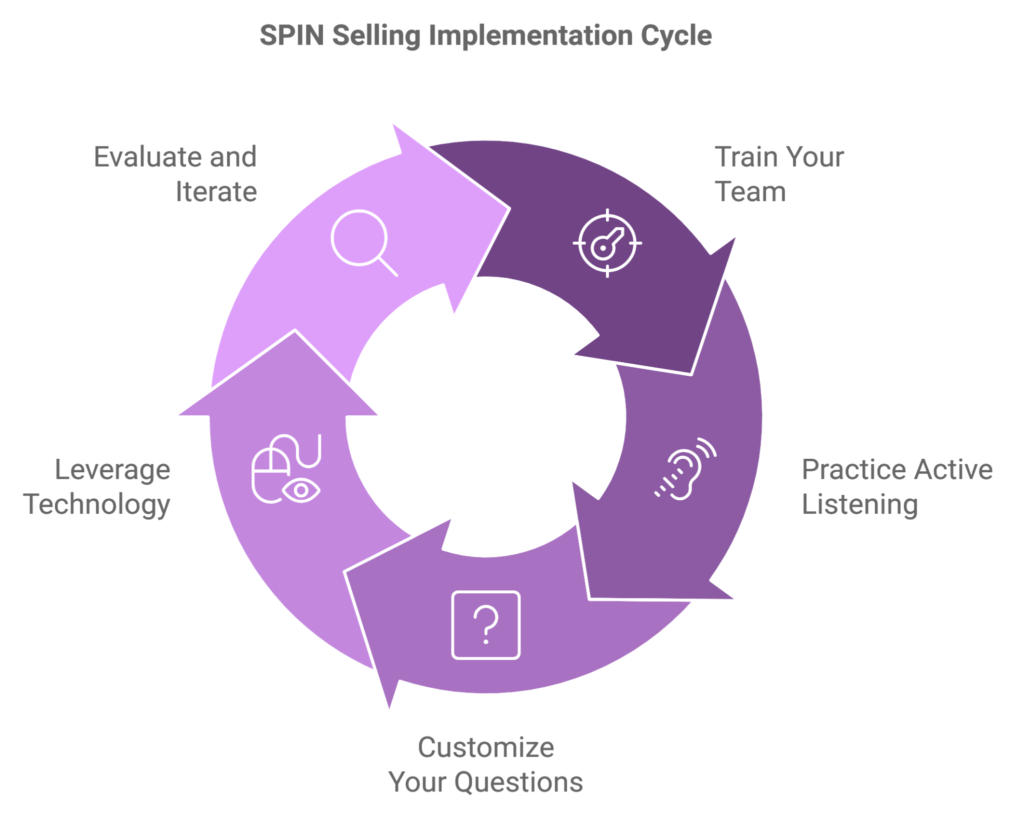
To incorporate SPIN Selling into your sales strategy effectively, consider these steps:
- Train Your Team: Provide thorough training on the SPIN framework, including real-world scenarios and roleplays.
- Practice Active Listening: Sales reps must focus on understanding the prospect’s responses rather than rushing to pitch a product.
- Customize Your Questions: Tailor SPIN questions to align with your industry, products, and customer personas.
- Leverage Technology: Use CRM tools to track the effectiveness of SPIN questions and analyze customer feedback.
- Evaluate and Iterate: Regularly review sales conversations to identify what’s working and where improvements are needed.
Key Takeaways
- SPIN Selling is a scientifically validated framework that prioritizes customer-centric conversations.
- The four-question structure (Situation, Problem, Implication, Need-Payoff) ensures meaningful and results-driven discussions.
- It is particularly effective for complex, high-value B2B sales scenarios where understanding customer needs is critical.
- Implementing SPIN Selling requires commitment, training, and continuous refinement to achieve optimal results.
- By focusing on value creation rather than hard selling, SPIN Selling builds trust and improves long-term customer relationships.
Conclusion
SPIN Selling isn’t just a technique; it’s a mindset shift that empowers sales professionals to lead with empathy and insight. By understanding and addressing customer needs, you create genuine value for your clients and position yourself as a trusted advisor.
Whether you’re dealing with complex B2B sales or looking to refine your sales conversations, SPIN Selling offers a proven path to success. Start adopting this transformative approach today and witness the impact it can have on your sales performance.
FAQs
- What does SPIN Selling stand for?SPIN stands for Situation, Problem, Implication, and Need-Payoff—the four types of questions used in the methodology to uncover and address customer needs effectively.
- Who created SPIN Selling?SPIN Selling was developed by Neil Rackham and introduced in his book SPIN Selling, which is based on extensive research into successful sales conversations.
- Is SPIN Selling suitable for all types of sales?SPIN Selling is most effective for complex, high-value sales scenarios, particularly in B2B environments. It may not be as effective for quick, transactional sales where customer needs are straightforward and decisions are made quickly.
- How can I train my team in SPIN Selling?You can train your team by providing resources like Neil Rackham’s book, organizing workshops, role-playing sessions, and hiring sales trainers specializing in SPIN Selling. Regular practice and feedback are crucial for mastering the technique.
- What is the biggest advantage of SPIN Selling?The biggest advantage of SPIN Selling is its focus on understanding and addressing customer needs. This approach fosters trust, improves the likelihood of closing deals, and ensures long-term customer satisfaction.
- Can SPIN Selling be used with other sales methodologies?Yes, SPIN Selling can complement other sales methodologies like consultative selling or solution selling. It provides a strong foundation for customer-focused conversations and can be integrated into broader sales strategies.