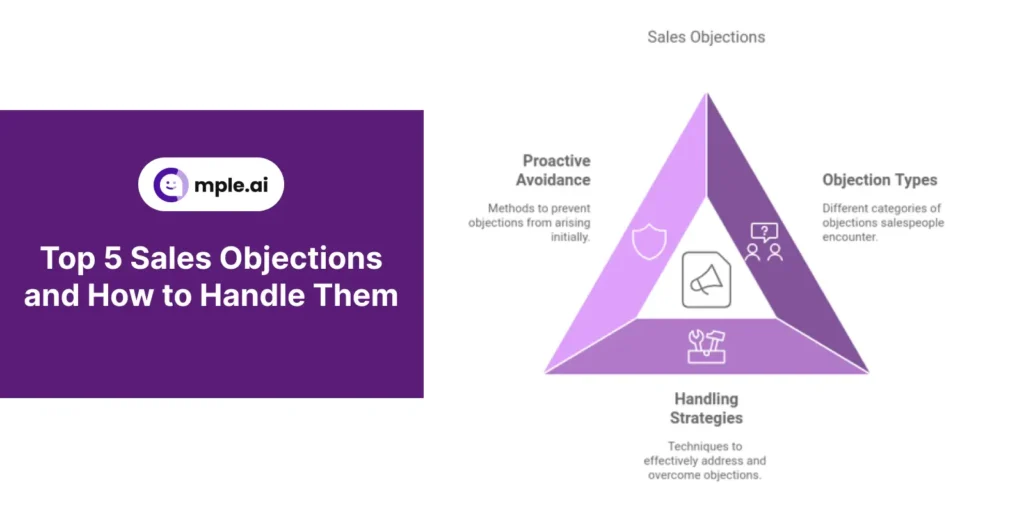
In sales, objections can be challenging but are crucial in understanding the customer’s true needs and concerns. With the right approach, you can turn objections into powerful opportunities to showcase your product’s value and strengthen your prospect’s confidence. In this blog, we’ll cover the top 5 objections sales professionals often encounter, strategies to handle them effectively, and additional tips to proactively avoid objections in the first place.
What You’ll Learn
- Key techniques to handle the most common sales objections effectively
- Strategies to address objections with empathy and confidence
- Practical examples of handling objections to keep conversations on track
- Proactive tips to avoid objections before they arise, making the sales process smoother
1. “It’s Too Expensive”
Why This Happens: This objection commonly occurs when the customer is unsure of the value your product offers or if the price doesn’t align with their current budget. It’s often a signal to dive deeper into how your product can deliver value over time.
How to Handle It:
Tactic 1: Highlight Return on Investment (ROI)
Shift the focus from upfront cost to long-term value. Share real-world data or testimonials showing how similar clients gained a strong return on investment.
Example Response: “I understand the price is a concern. Many of our clients had the same initial reaction but found that the savings and improvements in efficiency far outweighed the initial cost.”
Tactic 2: Provide Cost Breakdown
Dividing the total price into monthly or weekly costs can make the expense feel more manageable and relatable.
Example Response: “If we break this down, it comes to just $X per week, which aligns with achieving specific benefits. This can help make the most of your investment in day-to-day operations.”
2. “I’m Already Using a Competitor”
Why This Happens: When a prospect already uses a competitor, it suggests loyalty or familiarity with the existing solution, which can create hesitation in making a switch
How to Handle It:
Tactic 1: Emphasize Unique Selling Points (USPs)
Demonstrate the unique aspects of your product that competitors lack. Focus on benefits rather than directly critiquing the competitor.
Example Response: “I understand you’re using a similar solution. Many of our clients were in the same situation but made the switch because our platform offers unique feature that directly addresses specific need. Would you like to see how it could improve your process?”
Tactic 2: Ask About Gaps in Their Current Solution
Identify any frustrations they have with their current provider, then highlight how your product resolves those issues.
Example Response: “Are there any features or results you’re not fully satisfied with in your current setup? We might be able to address those with our specialized features.”
3. “I’m Not Ready to Buy Right Now”
Why This Happens: This objection often reflects timing concerns or a need for further evaluation. It’s a sign the buyer is interested but may not feel ready to commit immediately.
How to Handle It:
Tactic 1: Provide Informative Resources
Offer whitepapers, case studies, or e-books that allow them to review your product’s benefits at their own pace, helping build confidence.
Example Response: “I understand you need time to consider. Here’s some additional information on how we’ve helped companies like yours achieve their goals. Would you be open to a follow-up next month to discuss any questions?”
Tactic 2: Suggest a Trial or Demo
Allowing them to experience your product firsthand can be a great way to ease into the buying decision.
Example Response: “Many of our clients found it helpful to start with a trial period. It’s a commitment-free way to explore how well this solution meets your needs.”
4. “I Need to Consult My Team/Manager”
Why This Happens: This objection suggests that the buyer is not the sole decision-maker or that they need to build consensus within their team.
How to Handle It:
Tactic 1: Offer Group Involvement
Suggest a demo for the entire team, allowing everyone to engage and ask questions, which can help build consensus.
Example Response: “Absolutely, I’d be happy to set up a session with your team to go through all their questions. This way, everyone can understand how the solution fits into your company’s needs.”
Tactic 2: Provide Supportive Materials
Offer resources that the buyer can easily share with their team, such as comparison charts or a benefits overview.
Example Response: “I can send a detailed packet with all the information your team might need. This could make it easier for everyone involved to make an informed decision.”
5. “Your Product Doesn’t Fit Our Needs”
Why This Happens: This objection can indicate a misunderstanding of your product’s capabilities or a specific need that the buyer doesn’t believe your solution addresses.

How to Handle It:
Tactic 1: Ask Clarifying Questions
Ask questions to uncover the true nature of their needs and identify if there’s a misunderstanding or a feature that could meet their requirements.
Example Response: “Could you elaborate on what specific needs aren’t being met? We may have features or customization options that can better address those concerns.”
Tactic 2: Offer Customization Options
If your product allows customization, highlight how it can adapt to meet their unique requirements.
Example Response: “Our product has customization options that could be tailored specifically for your needs. Let’s discuss how we could configure it to address those requirements.”
Example Conversation: Handling Common Sales Objections
To illustrate these strategies in action, here’s an example conversation between a salesperson and a prospect, covering two common objections: “It’s too expensive” and “I need to consult my team.”
Scenario:
A salesperson is pitching a SaaS solution to a prospect who has shown interest but is hesitant due to price and the need for team approval.
Salesperson:
“I appreciate you taking the time to chat today! Based on our earlier conversation, it sounds like you’re looking for a tool to streamline your team’s workflows and increase productivity. How does that sound?”
Prospect:
“Yes, but I have to be honest—I’m a bit concerned about the price. We’ve been careful with our budget recently.”
Salesperson:
“I completely understand. Many of our clients initially had similar concerns. We’ve designed our solution to deliver strong ROI, helping companies like yours save both time and resources over the long term. Let’s break down the numbers: our clients typically see a [mention specific percentage or monetary figure] return on investment within the first year. Would it be helpful to see how those savings might look for your team?”
Prospect:
“That’s interesting, but I’d need to see how it would apply to us specifically. And I’d also have to run it by my team—especially my manager—to get everyone’s buy-in.”
Salesperson:
“Absolutely! I can work with you to customize an ROI breakdown specific to your team’s needs and priorities, so you have a clear picture of the impact. We also often meet with key stakeholders to ensure everyone’s questions are answered. I could arrange a demo for your team if that’s helpful. This way, your manager and other team members can see the value firsthand and ask any questions they might have.”
Prospect:
“Yes, a team demo could help. Let’s set something up for next week.”
Salesperson:
“Perfect! I’ll send over some additional resources, including case studies from similar clients, to share with your manager in the meantime. This should help everyone understand the potential impact. I’ll follow up with a calendar invite for the demo—looking forward to showing you all the ways we can make this a valuable investment for your team.”
Additional Tips to Avoid Objections
Being proactive is key to reducing objections and building a smoother path to closing. Here are some strategies to prevent objections from arising in the first place:
- Qualify Leads Early: Ensure that you’re speaking to the right prospects by asking qualifying questions upfront. This will help you identify if your product truly meets their needs and budget.
- Clearly Define Your Value Proposition: Be upfront about the unique benefits and value of your product early in the conversation. The more clearly you demonstrate how your product solves their specific problems, the fewer objections you’re likely to encounter.
- Use Case Studies and Testimonials: Share relevant success stories that demonstrate how similar customers have benefited. Case studies help build credibility and address concerns preemptively by showing proven results.
- Address Potential Concerns Proactively: If you anticipate common objections (such as price or competition), address them head-on by integrating counterpoints into your presentation. For example, if you know price might be an objection, explain the ROI in your initial pitch.
- Build Trust and Rapport Early: Building a relationship with prospects increases their comfort level, making them more open to hearing your solutions and less likely to raise objections.
- Listen Actively: Many objections can be prevented if you listen closely to what the prospect is saying and adapt your pitch to address their needs specifically. Active listening helps you understand underlying concerns and address them before they become objections.
How mple.ai Can Help You Master Objection Handling
mple.ai is designed to transform the way you handle sales objections and build essential sales skills with AI-driven roleplays and evaluations. Through realistic simulations tailored to your industry, mple.ai helps you:
- Practice Handling Objections in Real-Time: Engage in dynamic roleplay scenarios that mirror real-life objections, allowing you to refine your response techniques in a risk-free environment.
- Receive Personalized Feedback: mple.ai’s AI-powered evaluations provide immediate, personalized insights on your performance, highlighting areas for improvement and reinforcing effective strategies.
- Strengthen Confidence and Empathy: Build confidence in addressing objections with a focus on understanding and empathizing with customers’ concerns.
- Optimize Skills Across Teams: Empower your entire sales team with consistent training and real-time feedback to ensure everyone masters objection handling.
Whether you’re preparing for challenging client conversations or honing your objection-handling skills, mple.ai equips you to turn every sales conversation into an opportunity for success.
Key Takeaways
- Understand the Objection: Listen carefully to the prospect’s concerns to gain insights into their perspective.
- Provide Value-Based Responses: Instead of focusing on price, focus on the value and results your product can deliver.
- Use Proactive Techniques: Qualifying leads and presenting value upfront can help prevent many objections from arising.
- Stay Solution-Oriented and Empathetic: Respond with empathy and focus on how your solution can resolve their specific challenges.
Conclusion
Mastering objection handling and avoiding potential objections before they surface are essential skills for sales professionals. By taking a proactive approach, listening carefully, and emphasizing value, you can reduce the frequency of objections and handle them effectively when they do arise. With practice and the right strategies, you’ll be able to build stronger relationships with prospects and close more deals.
FAQs
- How can I tell when to stop addressing objections and close the sale? If the prospect appears satisfied and gives positive signals, it’s a good time to move toward closing.
- What if a prospect raises the same objection multiple times? Try addressing it from a new perspective, perhaps with a case study or real-life example to reassure them.
- Should I bring up competitors when handling objections? It’s best to avoid critiquing competitors. Instead, emphasize the unique strengths of your solution.
- How can I practice handling objections? Engage in role-playing exercises or use AI-driven simulations to refine your skills.
- Is it ever okay to walk away from a prospect? Yes. If your product genuinely doesn’t meet their needs, it’s best to part on good terms, showing professionalism and leaving the door open for future opportunities.