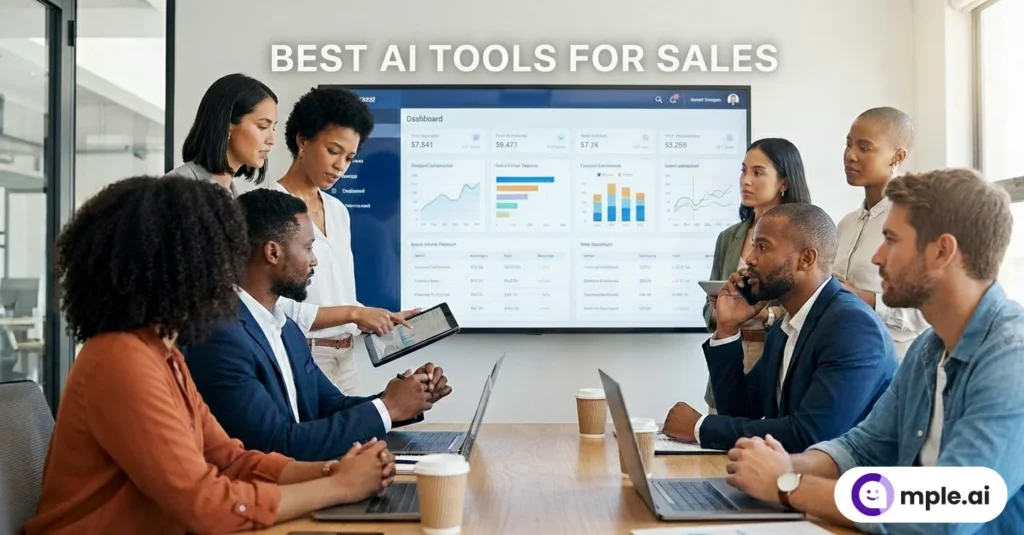
Sales teams search for AI tools for one clear reason: results. Faster ramp-up, better conversations, stronger follow-ups, and fewer missed deals. Yet most lists online lump together every AI product under the sun, without explaining how each tool actually helps salespeople close more business.
Below, you’ll find five proven AI tools for sales that address real sales problems—training gaps, poor discovery calls, inconsistent follow-ups, weak forecasting, and low conversion confidence. Each section explains what the tool does, where it fits in the sales cycle, and who should use it.
Why Sales Teams Actively Look for AI Tools
Before choosing any AI sales tool, it helps to understand the problems driving these searches:
- Sales conversations sound inconsistent across teams
- Objection handling depends on individual experience
- Managers struggle to coach at scale
- CRM data exists, but insights remain unused
According to research from Gartner, a majority of B2B sales interactions are now digital-first, increasing the need for structured coaching and conversation readiness. This shift explains why searches for AI tools for sales, AI sales coaching software, and AI roleplay tools continue to grow
1. mple AI – AI Coaching and Roleplay for Sales Readiness
Best for: Sales training, onboarding, roleplays, and conversation quality
Ideal users: Pharma, BFSI, SaaS, medical devices, and enterprise sales teams
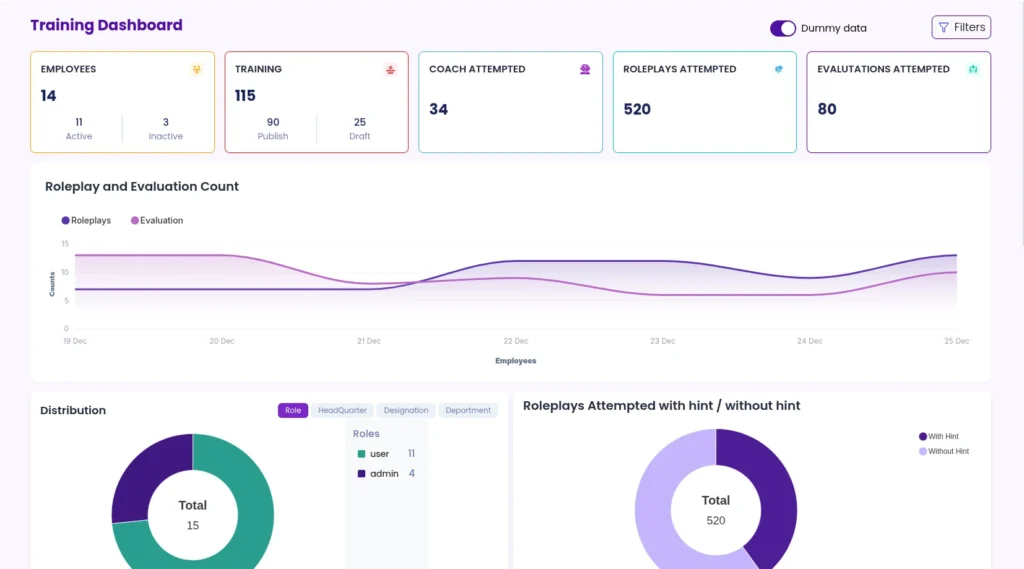
mple.ai focuses on the part of sales most tools ignore: practice before performance. AI-driven roleplays give sales reps a safe, structured environment to master real buyer conversations, practice objections, and refine their messaging with intelligent prompts and feedback.
What makes mple.ai stand out
- AI roleplays based on real sales scenarios
- Conversation-level feedback, not generic scores
- AI coach that evaluates pitch structure, clarity, and objection handling
- Industry-specific training for regulated sectors
How it helps sales teams
- Reduces onboarding time for new hires
- Improves confidence before live calls
- Brings consistency to discovery and pitching
- Helps managers coach without listening to every call
For teams where conversation quality directly impacts conversion, mple.ai acts as a daily practice environment rather than a reporting tool.
2. HubSpot Sales Hub – AI-Assisted CRM and Deal Management
Best for: Pipeline tracking, follow-ups, sales operations
Ideal users: SMBs and mid-market sales teams
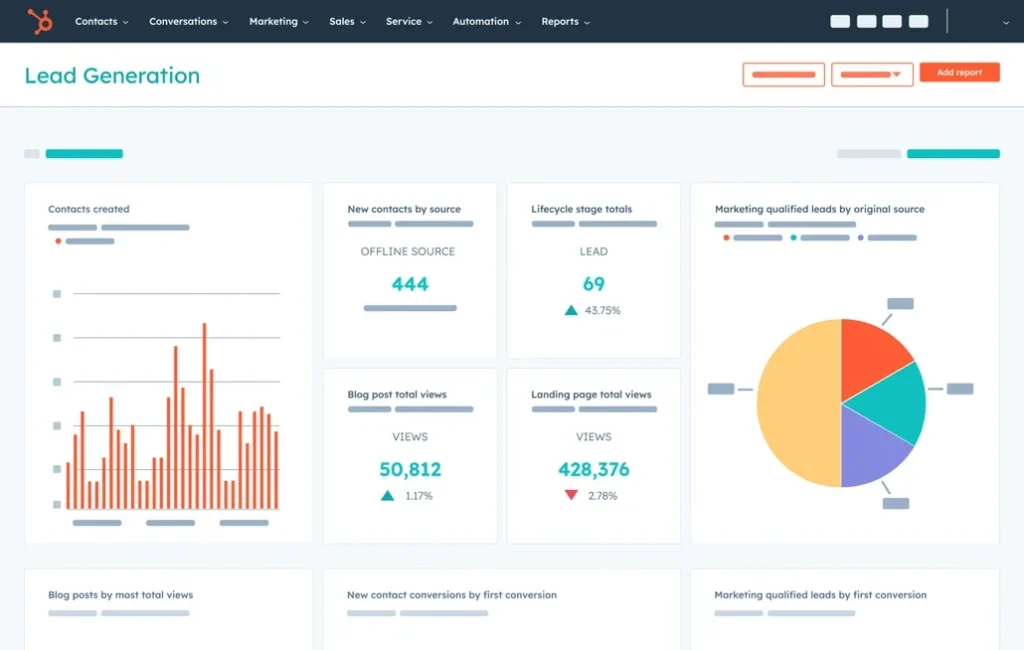
HubSpot uses AI to support sellers inside the CRM. Its sales hub helps reps prioritize deals, automate follow-ups, and maintain clean pipelines.
Key AI-powered features
- Email recommendations and subject line suggestions
- Deal scoring based on engagement signals
- Automated activity logging
- Forecast support using historical deal data
Where it fits best
HubSpot works well for teams that already rely on CRM discipline and want AI assistance to reduce admin work. It supports sales execution, though it does not train reps on how to speak with customers.
3. Salesforce – AI Insights for Enterprise Sales Teams
Best for: Forecasting, analytics, enterprise deal visibility
Ideal users: Large sales organizations with complex pipelines
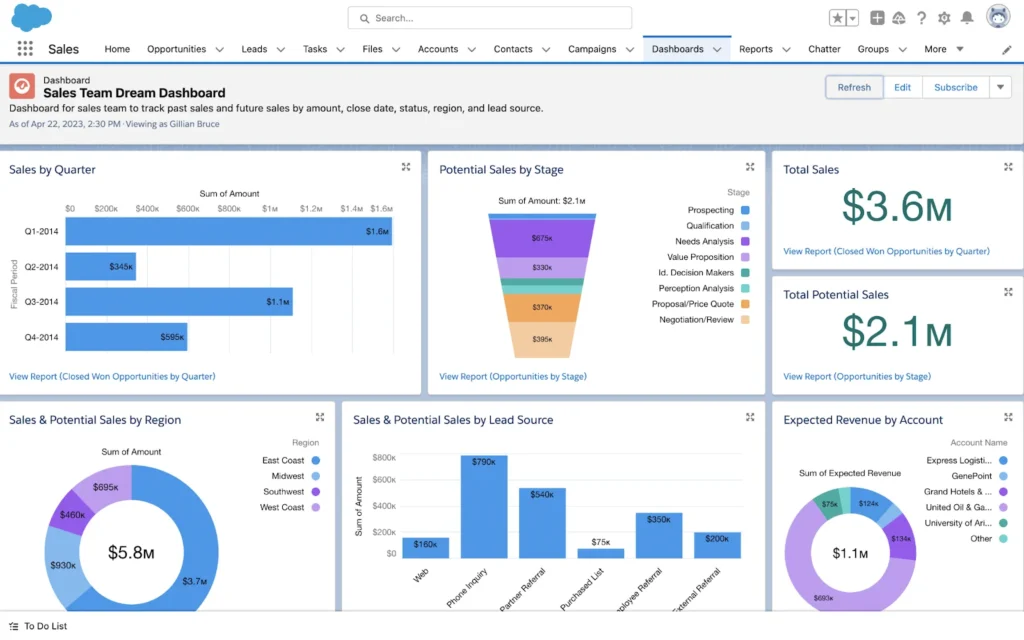
Salesforce embeds AI, helping leaders and reps interpret large volumes of CRM data.
Core capabilities
- Opportunity scoring based on deal history
- Forecast insights and risk signals
- Automated data capture
- Sales activity recommendations
Important consideration
Salesforce depends heavily on clean CRM data. It helps leaders make decisions but does not actively improve how reps conduct sales conversations.
4. Gong — AI Analysis of Sales Calls and Meetings
Best for: Call analysis, coaching insights, deal reviews
Ideal users: SaaS and inside sales teams with high call volumes
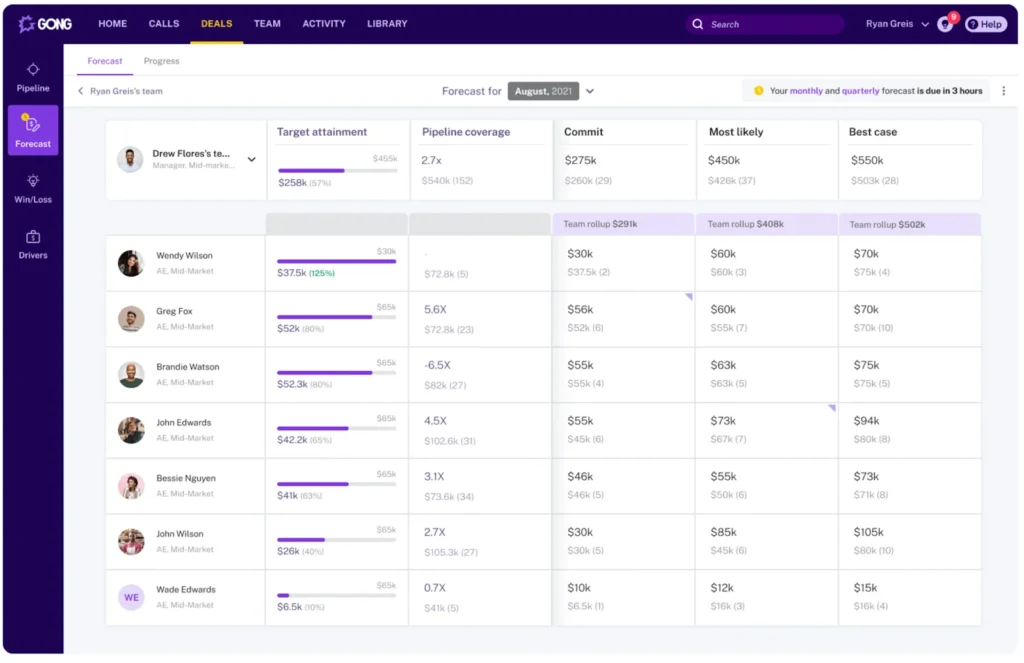
Gong analyzes recorded sales calls to surface patterns across winning and losing deals.
What Gong does well
- Transcribes and analyzes sales conversations
- Identifies talk-to-listen ratios
- Flags risks in live deals
- Helps managers review calls efficiently
Where it stops short
Gong reviews conversations after they happen. It shows what went wrong but does not give reps a place to practice before speaking with customers.
5. Outreach — AI-Driven Sales Engagement and Sequencing
Best for: Outbound sales, follow-ups, engagement tracking
Ideal users: SDR and outbound sales teams
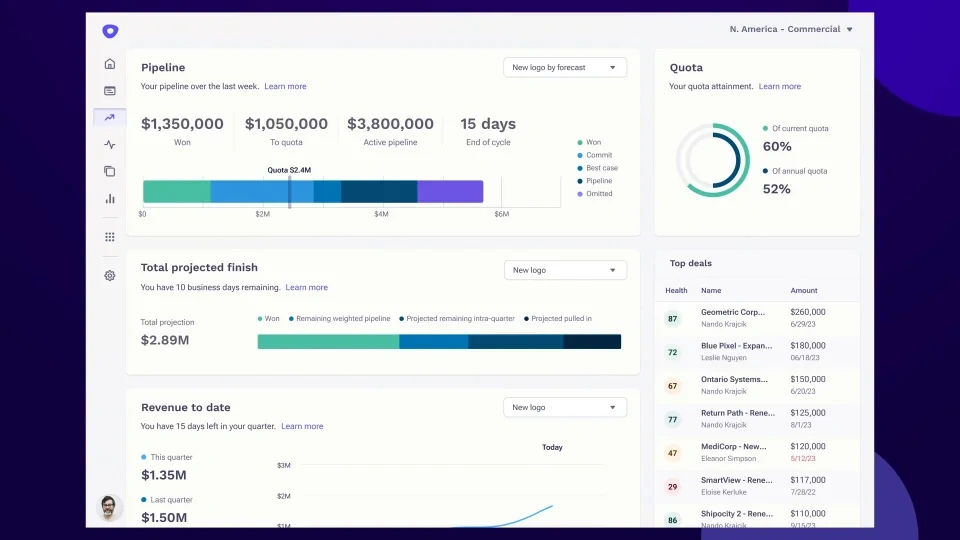
Outreach helps teams manage emails, calls, and sequences with AI-assisted prioritization.
Key strengths
- AI-guided task prioritization
- Sequence optimization
- Engagement analytics
- CRM integrations
Outreach improves activity efficiency, though it does not address how well reps handle live conversations.
How to Choose the Right AI Tool for Sales
| Sales Need / Challenge | When This Is the Priority | Recommended AI Tool Type | Example Tools |
|---|---|---|---|
| Sales training & readiness | Reps struggle with objections, conversations lack structure, onboarding takes too long | Training-focused AI | mple.ai |
| Pipeline visibility & forecasting | Deal tracking is unclear and forecast accuracy matters | CRM-focused AI | HubSpot, Salesforce |
| Call review & coaching insights | You want insights from recorded sales calls | Conversation analytics | Gong |
| Outbound activity & follow-ups | Outbound volume and sequence execution are the main goals | Engagement automation | Outreach |
Common Mistake Sales Teams Make with AI Tools
Many teams buy AI tools hoping for instant results. The reality is simpler:
- Tools that analyze data help managers
- Tools that train conversations help reps
- Results improve fastest when both exist
Research from McKinsey & Company consistently shows that sales performance improves when technology is paired with structured capability building, not when tools replace skill development.
FAQs: AI Tools for Sales
What is the best AI tool for sales teams?
The best tool depends on the problem. For improving sales conversations and readiness, mple.ai fits well. For CRM insights, Salesforce Einstein or HubSpot are stronger options.
Can AI replace sales reps?
No. AI supports preparation, analysis, and follow-ups. Human judgment and relationship-building remain central to closing deals.
Are AI sales tools useful for small teams?
Yes. Tools like HubSpot and mple.ai are commonly used by growing teams that want structure without heavy overhead.
How long does it take to see results?
Conversation-focused tools often show improvements within weeks. Analytics-heavy tools depend on data quality and adoption.